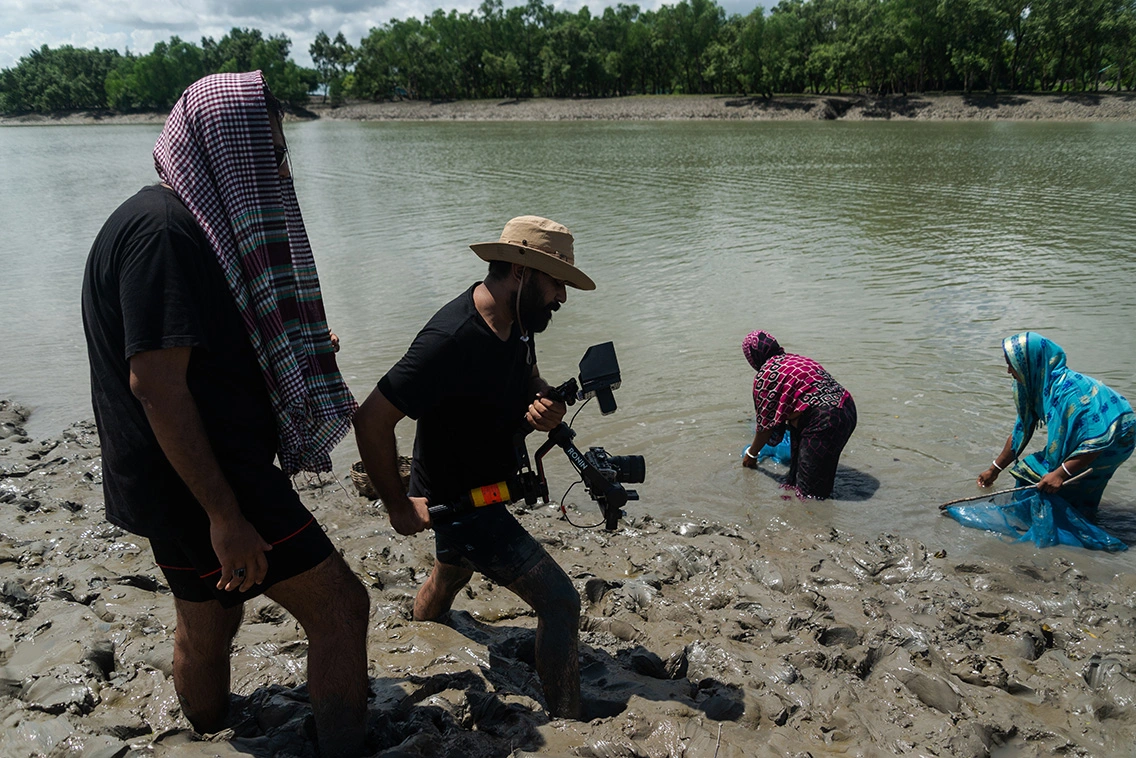
Getting filming permits in Bangladesh can feel confusing, slow, and forever — especially if you are an international crew on deadline. Rules are not centralized in one office, timelines are not clearly promised ever, and the correct issuing authority changes depending on where and what you film. This guide explains the 2025 process clearly, in simple terms, with practical steps that reflect how permits are actually issued on the ground — not how they are “theoretically” supposed to work.
As a production house working with foreign crews in Bangladesh, we secure permits on behalf of international broadcasters, streamers, documentary units, NGO storytellers, and branded content teams. The goal of this guide is to help you understand what is required before you land — so that the creative side of your project is never blocked by paperwork.
Do you need a filming permit in Bangladesh?

Yes, in most cases, unless you are filming in a controlled environment (private property), you will not publish or broadcast. But that’s rarely the case if you are filming for a doc or a news piece.
Filming permits are only one part of working legally in the country—our Filming in Bangladesh guide explains how permits, visas, customs clearance, fixer coordination, and location access fit together.
Bangladesh does not use a single universal film permit system. Whether you need an official permit — and from whom — depends on three variables:
- Where you are filming (public, private, sensitive, protected, religious, high-security)
- What you are filming (news, documentary, drama, branded, commercial, humanitarian, investigative)
- Who or what appears in the footage (general public, minors, military, critical infrastructure, endangered species, court areas etc.)
You generally need a filming permit if your production is:
- intended for broadcast/streaming / theatrical release
- shot in public, heritage, protected, or government-controlled locations
- involving security-sensitive subjects or high-profile individuals
- using noticeable crew or equipment (tripods, lighting, drones, crew vehicles, tracks, etc.)
You may not need a government permit for shoots entirely inside privately-owned, legally controlled interior locations — provided the owner gives written consent and the content is non-sensitive. However, publication (especially international release) can still trigger compliance questions later, so pre-clearance is safer.
Journalist Visa Requirements for Foreign Film Crews in Bangladesh
Before applying for filming permits, foreign crew members must obtain the correct visa type. Bangladesh requires foreign journalists, camera operators, and documentary filmmakers to enter on a Journalist Visa, not a tourist visa.
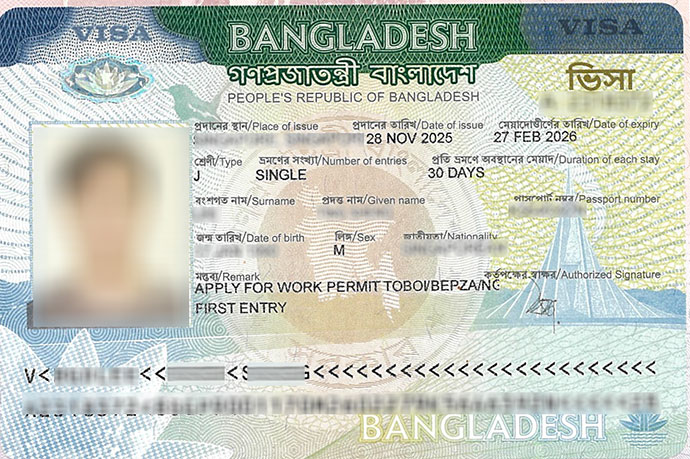
Check out our step-by-step guide to obtaining a journalist visa in Bangladesh for foreign journalists and filmmakers
Who issues filming permits in Bangladesh (and why it varies)
There is no single office — the issuing authority changes with location type, content type, and perceived sensitivity. Instead of a centralized “film commission,” Bangladesh functions on a situational authority model:
| Situation / Location Type | Who typically approves |
| Theatrical films, commercial cinema, and high-budget broadcast productions | Bangladesh Film Development Corporation (BFDC) + Ministry of Information |
| Streets, bridges, markets, stations, ports | Relevant civic / transport / safety authorities |
| Relevant civic / transport/safety authorities | Site trustees/custodians + local regulators |
| Forests, wildlife, protected areas (Sundarbans, Lawachara, etc.) | Bangladesh Forest Department + Ministry of Environment |
| Chittagong Hill Tracts (Rangamati, Bandarban, Khagrachari) | Ministry of Chittagong Hill Tracts Affairs + local military coordination |
| Historic sites, heritage complexes (Paharpur, Mahasthangarh, Shat Gombuj Mosque) | Department of Archaeology + site custodians |
| Private buildings & controlled interiors | Property owners + landlord consent |
| High-risk / security-adjacent areas, borders, critical infrastructure | Competent government security authority + Ministry of Home Affairs |
| Cox’s Bazar, St. Martin’s Island, coastal zones | Local administration + Coast Guard + Navy clearance (if maritime filming) |
| Rohingya Camps | RRRC |
There is no “one permit fits all”. The same crew and the same camera can require zero, one, or multiple permits depending solely on intent + location + sensitivity. This is also why using a local fixer/production handler is standard practice — not because Bangladesh is unfriendly, but because the framework is conditional instead of unified.
Bangladesh Film Development Corporation (BFDC) – The Official Film Permit Authority
For commercial films, theatrical releases, and many professional documentary productions, the Bangladesh Film Development Corporation (BFDC) is the primary government authority that issues filming permits.
When you need a BFDC permit:
- Feature films (narrative, theatrical release)
- Commercial productions for cinema distribution
- High-budget documentaries intended for broadcast
- Productions involving local cast/crew coordination through official channels
- Any production requiring official government film industry endorsement
BFDC Processing Time: Expect 21-30 days minimum for BFDC permit approval. The corporation coordinates with the Ministry of Information and other relevant authorities as part of its vetting process.
Documents BFDC typically requires:
- Formal application on company letterhead
- Complete shooting script or detailed treatment
- Producer/director credentials and filmography
- Shooting schedule with specific locations
- Cast and crew list (local and foreign)
- Equipment list
- Financial details and production budget overview
- Previous work samples (if requested)
BFDC permits are separate from location-specific permits. Even with BFDC approval, you may still need permissions from site custodians, traffic authorities, or security agencies, depending on your locations.
Required documents for filming permits (2025)
Assume you will need — company intro, project synopsis, crew passports, schedule, equipment list, location list, and contributor details
When we apply on behalf of foreign productions, the permitting body usually asks for some or all of:
- Company introduction letter (stating purpose & platform)
- Short synopsis of the film/episode/campaign
- Filming dates (span + day-wise breakdown)
- Day-by-day location list & access plan
- Names & passport copies of all foreign crew
- Local partners / NGOs / talent you will film
- Full equipment manifest (especially for drones, wireless, and long lenses)
- Evidence of consent/access for private properties or human subjects
Missing even one required item can restart the application clock.
Visa-Related Documents (Foreign Crews)
In addition to permit documents, foreign crew members need:
- FF-I Form (Journalist/Media Worker Application)
- FF-II Form (Equipment Declaration)
- Ministry of Information clearance letter (obtained before visa application)
- Passport copies (6+ months validity)
- Equipment serial numbers and manifests
- Employer/production company letter of assignment
- Return flight bookings
Missing visa documents will prevent entry into Bangladesh, even if filming permits are approved.
How long do filming permits take in Bangladesh?
Typical lead time for standard non-sensitive work is ~2 weeks; sensitive or multi-authority work may need 3–6 weeks.
Influencing factors:
- Complexity of the subject (neutral vs politically/publicly sensitive)
- Number of authorities involved (single-tier vs multi-tier)
- Season and governance calendar (religious events, election period, strikes, national days)
- Presence of foreign crew (more scrutiny than purely local units)
- Equipment class (drones, gimbals, long glass, lighting trucks create extra steps)
Recent productions (late-2024 to 2025) we handled took:
- 8–14 days → simple non-sensitive doc / branded content with clean paperwork
- 21–35 days → human-rights / extractive industry/borderland / refugee-adjacent content
- 30–45+ days → government-adjacent, conflict-adjacent or multi-location national shoots
Filming permits in Bangladesh are official or contractual authorizations that allow a camera crew to legally shoot in a specific location or subject category. Because Bangladesh does not have one unified authority, permits are issued by the entity that controls the location or is responsible for regulating activity there.
How to Apply for Filming Permits in Bangladesh
To apply for filming permits in Bangladesh, you must coordinate your applications across multiple government bodies at least 6 to 8 weeks before your planned shoot date. Foreign crews are strictly prohibited from filming on tourist visas. They must obtain specialized media clearances.
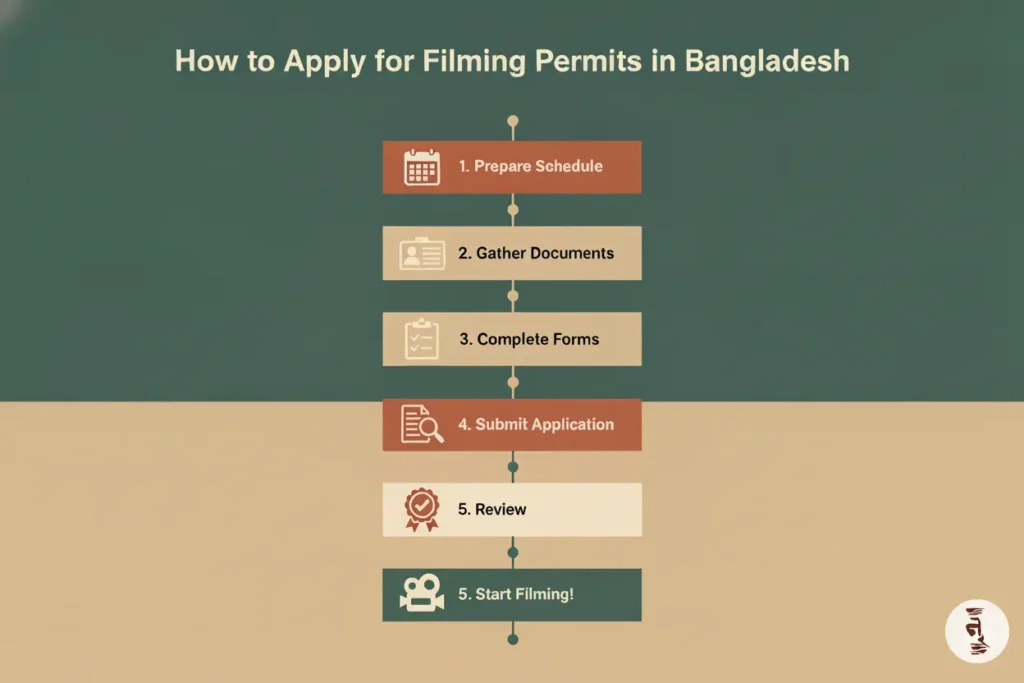
Step-by-Step Application Process
- Define what, where, and why you are filming.
- List all crew, equipment, and shoot dates.
- Secure written access/consent for private locations if relevant.
- Prepare the company letter, synopsis, passports, and schedule.
- File permit requests with the correct controlling authority.
- Respond to revisions/clarifications requested.
- Receive permits and carry printed & digital copies on set.
Costs and financial planning for filming permits
Bangladesh is cost-efficient compared to many countries, but costs depend on authority, crew scale, and risk profile — not a fixed tariff.
There is no single published “permit fee chart.” Costs typically arise from three buckets:
1) Administrative / filing costs
– Some authorities charge formal processing fees or require certified paperwork.
2) Location compensation/disruption fees
— Markets, religious sites, private estates, and heritage custodians may charge for disruption, exclusivity, or blocking access.
3) Logistics & compliance costs
— Police presence, road control, river access, unit moves, ferries, local fixers, translation, escorts, generators, etc.
Practical 2025–26 ranges we have seen:
- USD 0–300 for low-impact controlled interiors with owner consent
- USD 300–1,500 for multi-day public/heritage / high-footfall zones
- USD 1,500–6,000+ for multi-authority, high-security, or sensitive subjects
These are ranges — the governing logic is not “fee = location” but “fee = disruption + risk + scrutiny + authority layer.”
Equipment Import, Customs Clearance & ATA Carnet
Bangladesh customs require proper documentation for all professional filming equipment entering the country.
Temporary Import Options
Option 1: ATA Carnet (Recommended for major productions)
- International customs document for temporary equipment import
- No duty payment required
- Valid for multiple entries/exits
- Must be arranged in your home country before travel
- Cost: Varies by issuing country (typically USD 200-500 + percentage of equipment value as bond)
Option 2: Temporary Import Bond
- Arranged at the Bangladesh customs on arrival
- Requires a detailed equipment manifest with serial numbers
- May require a deposit (refunded on export)
- Longer clearance time (2-6 hours vs. 30 minutes with Carnet)
Equipment List Requirements
Prepare a detailed manifest including:
- Item description (camera, lens, tripod, drone, etc.)
- Brand and model
- Serial number
- Value in USD
- Quantity
Pro Tip: Customs clearance for filming equipment is generally quick and straightforward with proper documentation and a local fixer. Nree Productions handles customs coordination to ensure your gear clears in under an hour.
Drone Equipment Special Notice
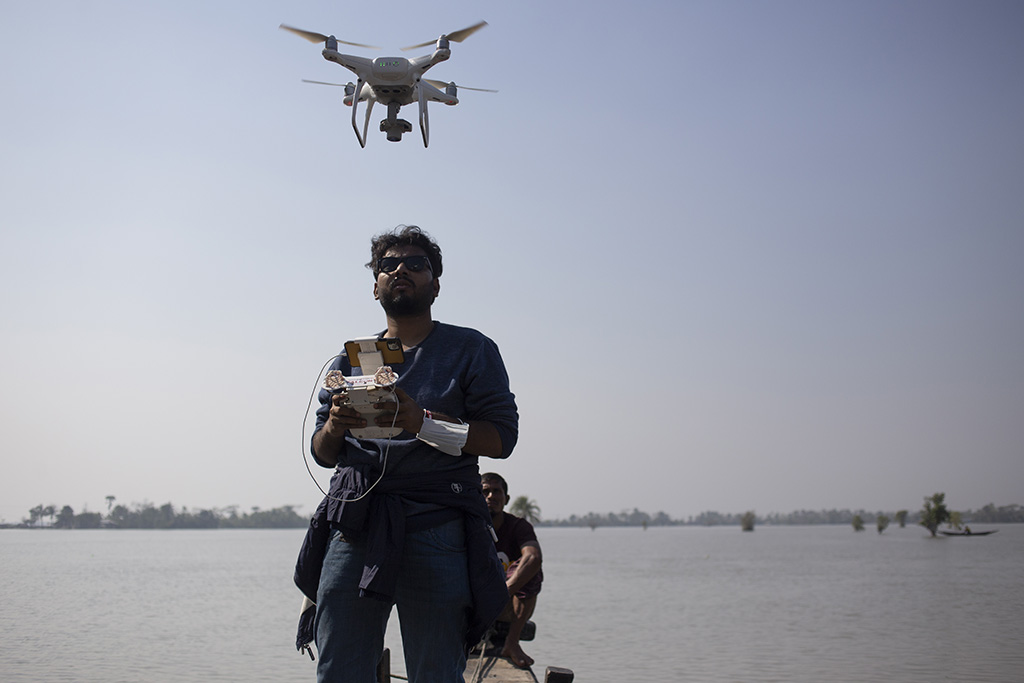
Drones require additional documentation:
- Bangladesh Civil Aviation Authority (CAAB) clearance
- Drone registration and operator license (if applicable)
- Flight plan submission for each filming day
- Restricted zones map compliance
Drone permits typically take 30 days to the permit timeline.
Drone permits & sensitive categories
Treat drones, critical infrastructure, and border/coastal zones as special cases — they trigger additional review or outright restriction.
You should expect extra scrutiny if filming involves:
- Drones or elevated optics near public density/bridges / ports
- Refugee camps, border belts, riverine frontier zones
- Religious processions, high-profile individuals, courts, and hospitals
- Critical infrastructure (power, telecom, defense-adjacent structures)
- Wildlife protected areas and islands
In several of these zones, approval is not only an administrative step — it is a risk-classification exercise.
Filming in Specific High-Risk & Protected Locations
Certain locations in Bangladesh require extra permits, military coordination, or are restricted entirely.
Chittagong Hill Tracts (Rangamati, Bandarban, Khagrachari)
The Hill Tracts are protected areas requiring special permits:
- Ministry of Chittagong Hill Tracts Affairs clearance is mandatory
- Military escort may be required in certain zones
- Permit processing: 4-6 weeks minimum
Sundarbans Mangrove Forest
The world’s largest mangrove forest and UNESCO World Heritage Site:
- Bangladesh Forest Department permit required
- Ministry of Environment, Forest and Climate Change approval for professional filming
- Accompanied forest guide is mandatory
- Restricted filming hours and zones
- Wildlife filming requires additional clearances
- Permit processing: 3-4 weeks
Rohingya Refugee Camps (Cox’s Bazar)
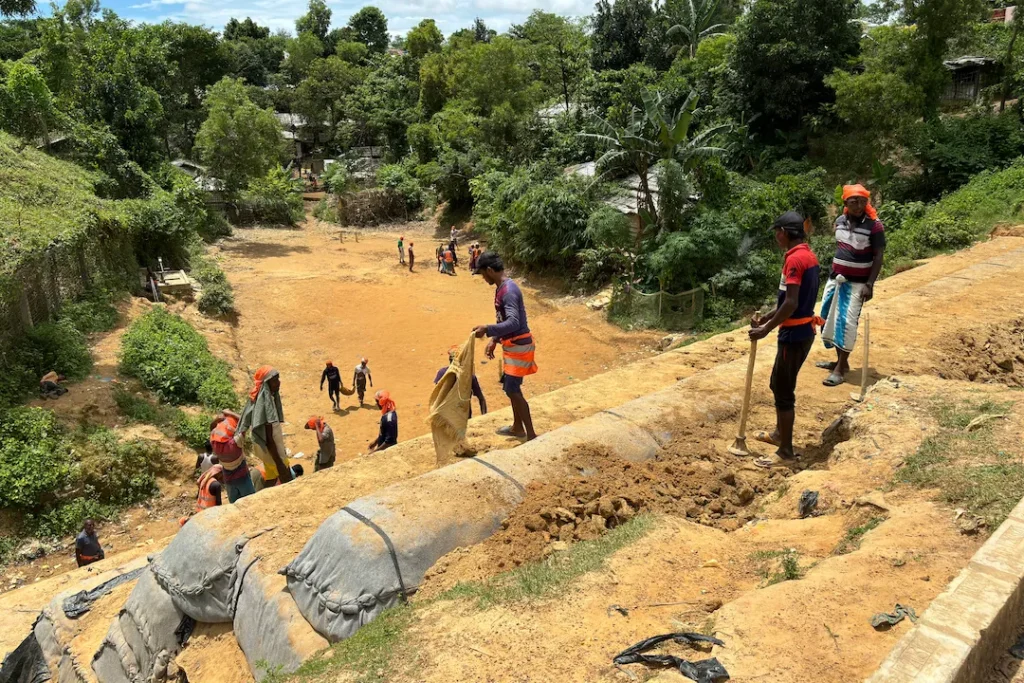
Highly restricted and sensitive zone. It’s totally different from other locations in Bangladesh for shooting. That’s why we have a detailed guideline for filming in the Rohingya camp. I would recommend that you go through this guideline very carefully if you have a shoot coming up in the Rohingya Camps.
St. Martin’s Island & Maritime Zones
Bangladesh’s only coral island:
- Bangladesh Navy clearance for maritime filming
- Coast Guard coordination for boat-based shoots
- Local administration (Upazila) permits
- Weather-dependent access (monsoon closures June-September)
Border Areas (India, Myanmar Frontiers)
- Border Guard Bangladesh (BGB) clearance is mandatory
- Ministry of Home Affairs approval required
- Filming is often restricted to within 10km of international borders
- Extremely slow approval process or outright denial
Best Time to Film in Bangladesh (Weather & Production Calendar)
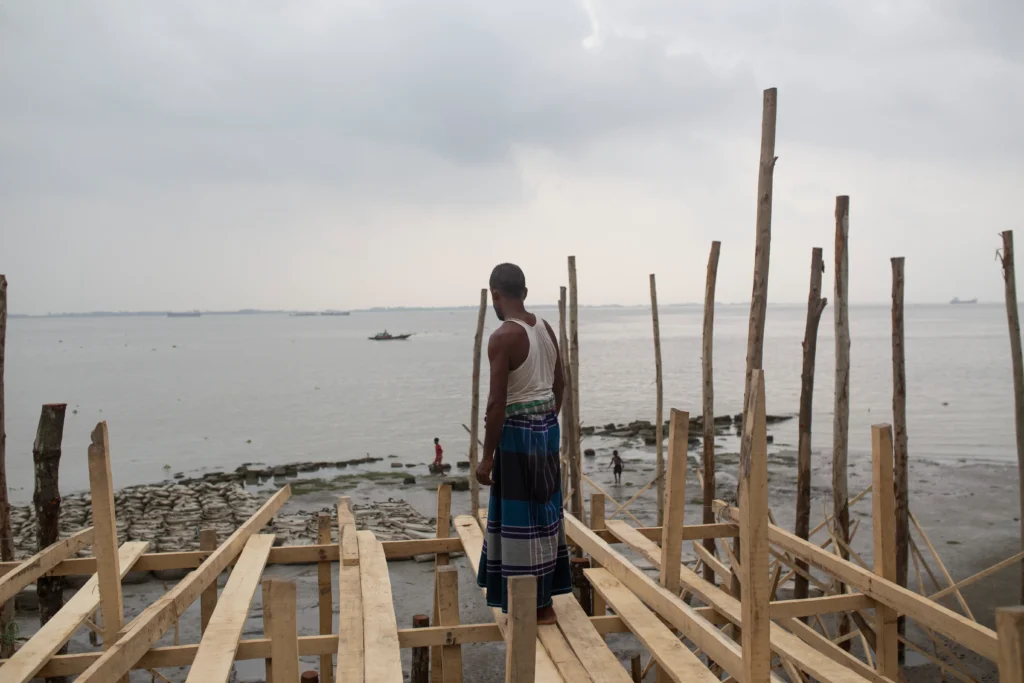
Bangladesh has three distinct seasons that significantly impact filming logistics:
Winter Season (October – March) — BEST FOR FILMING
- Temperature: 15-25°C (59-77°F)
- Conditions: Cool, dry, minimal rainfall
- Visibility: Excellent (clear skies, low humidity)
- Recommendation: Ideal for all production types
- Considerations: December-January can have morning fog
Summer Season (March – June)
- Temperature: 30-40°C (86-104°F)
- Conditions: Hot, humid, occasional pre-monsoon storms
- Recommendation: Feasible but challenging for outdoor shoots
- Considerations: Crew heat management essential, hydration critical
Monsoon Season (June – October)
- Temperature: 25-35°C (77-95°F)
- Conditions: Heavy rainfall, flooding, high humidity
- Recommendation: Avoid unless monsoon is the story
- Considerations: River access is difficult, roads are flooded, and equipment is at risk
Cultural Calendar Considerations
Avoid or plan carefully around:
- Ramadan (dates vary yearly) – reduced daylight filming hours, many locations closed
- Eid-ul-Fitr & Eid-ul-Adha – 3-4 day holidays, government offices closed, mass migration
- Durga Puja (September/October) – Hindu festival, excellent filming opportunity, but crowded
- Victory Day (December 16) – National holiday, government offices closed
- Language Movement Day (February 21) – Crowds at Shaheed Minar
Pro Tip: “Schedule shoots for November-February for optimal weather and fewer permit delays.” But honestly, this is a vague word everyone keeps saying. Your Production depends on the subject matter and plan whenever you have to shoot. You have to smartly accommodate against all odds. Here, a smart local producer and fixer can make a difference. Nree Productions can be your ultimate fixer in Bangladesh to solve this problem smartly.
Major Productions Filmed in Bangladesh
Bangladesh has hosted international feature films, documentaries, and television productions:
Feature Films
- Extraction (2020) – Netflix action film starring Chris Hemsworth (Dhaka doubled for fictional “Dhaka”)
- Avengers: Age of Ultron (2015) – Marvel Studios (scenes filmed in Chittagong and Dhaka)
- Around the World in 80 Days (1956) – Classic adventure film (Dhaka sequences)
Television & Documentary
- The Amazing Race – Multiple seasons featured Bangladesh challenges
- CNN, BBC, Al Jazeera – Regular documentary and news coverage
- National Geographic – Wildlife and environmental documentaries (Sundarbans, Royal Bengal Tiger)
- Vice Media – Multiple documentary series
Local Film Industry
Bangladesh has a thriving local film industry centered around BFDC in Dhaka, producing 80-100 Bengali-language films annually. The industry provides experienced local crew, actors, and production infrastructure.
Equipment Rental Availability: Major cities like Dhaka have professional filming equipment rental houses with cameras (ARRI, RED, Sony), lighting, grip, and sound packages available.
Frequently Asked Questions (FAQ)
Do I need a filming permit in Bangladesh for a small crew?
Yes, if the footage is for public release or filmed in public/regulated/sensitive areas. A small crew does not remove regulatory obligation.
How long do filming permits take in Bangladesh?
Expect around 2 weeks for straightforward cases and 3–6 weeks for multi-authority or sensitive shoots.
Can I film on private property without a government permit?
Yes, if the shoot is fully private and non-sensitive, but public release or press interest can still trigger later compliance checks.
Are drone permits hard to get in Bangladesh?
They are not impossible, but they are controlled. Expect additional justification, slower approval, or location-specific refusal.
Who issues filming permits in Bangladesh?
Different bodies depending on who controls the space — public infrastructure, protected zones, religious sites, security-sensitive areas, or private owners.
Can I apply for filming permits after I land?
Not recommended. Some approvals require foreign crew passports in advance and cannot be retro-fit once shooting has begun.
Do fixers or production service companies handle permits for foreigners?
Yes — most international productions delegate permitting to local production handlers because the system is situational, not unified. We at Nree Productions do that with utmost honesty and integrity. Contact us for details.
Do I need a journalist visa to film in Bangladesh?
Yes. Foreign crew members must enter on a journalist visa, not a tourist visa. This requires pre-clearance from the Ministry of Information (2-4 weeks) before visa application. Filming on a tourist visa is illegal and can result in deportation and equipment seizure
What are the FF-I and FF-II forms for filming in Bangladesh?
FF-I is the Journalist Application Form, and FF-II is the Equipment Declaration Form. Both are mandatory for journalist visa applications and must be submitted to the Bangladesh embassy/consulate along with the Ministry of Information clearance
How long does BFDC permit processing take?
Bangladesh Film Development Corporation (BFDC) permits typically require 21-30 days for approval. BFDC is the primary authority for theatrical films, commercial productions, and high-budget documentaries.
Can I bring my own filming equipment into Bangladesh?
Yes, but you need proper customs documentation. An ATA Carnet is recommended for major equipment. Without proper paperwork, equipment may be held at customs or you may be required to pay temporary import bonds. Always prepare a detailed equipment manifest with serial numbers.
What is the best season to film in Bangladesh?
“Schedule shoots for November-February for optimal weather and fewer permit delays.” But honestly, this is a vague word everyone keeps saying. Your Production depends on the subject matter and plan whenever you have to shoot. You have to smartly accommodate against all odds. Here, a smart local producer and fixer can make a difference. Nree Productions can be your ultimate fixer in Bangladesh to solve this problem smartly.
Can I film in the Sundarbans or Chittagong Hill Tracts?
Yes, but these require special permits and extended processing times. Sundarbans requires Forest Department clearance (3-4 weeks). The Chittagong Hill Tracts requires Ministry of CHT Affairs approval and possible military escort (4-6 weeks). Some areas remain restricted.
Is filming equipment rental available in Bangladesh?
Yes. Dhaka has professional equipment rental houses offering cameras (ARRI, RED, Sony), lighting, grip, and sound packages. However, highly specialized equipment should be imported.
Conclusion — and why to act before arrival
Filming permits in Bangladesh are obtainable — they simply require correct scoping, correct authority mapping, and enough lead time to avoid rejection or delay.
Bangladesh is not hostile to international cameras — it is structurally conditional. If you map your intent, locations, human subjects, and equipment early, permits become predictable rather than chaotic. If you wait until arrival or apply with missing documents, the same system becomes slow and punitive. The difference is timing and completeness, not luck.
