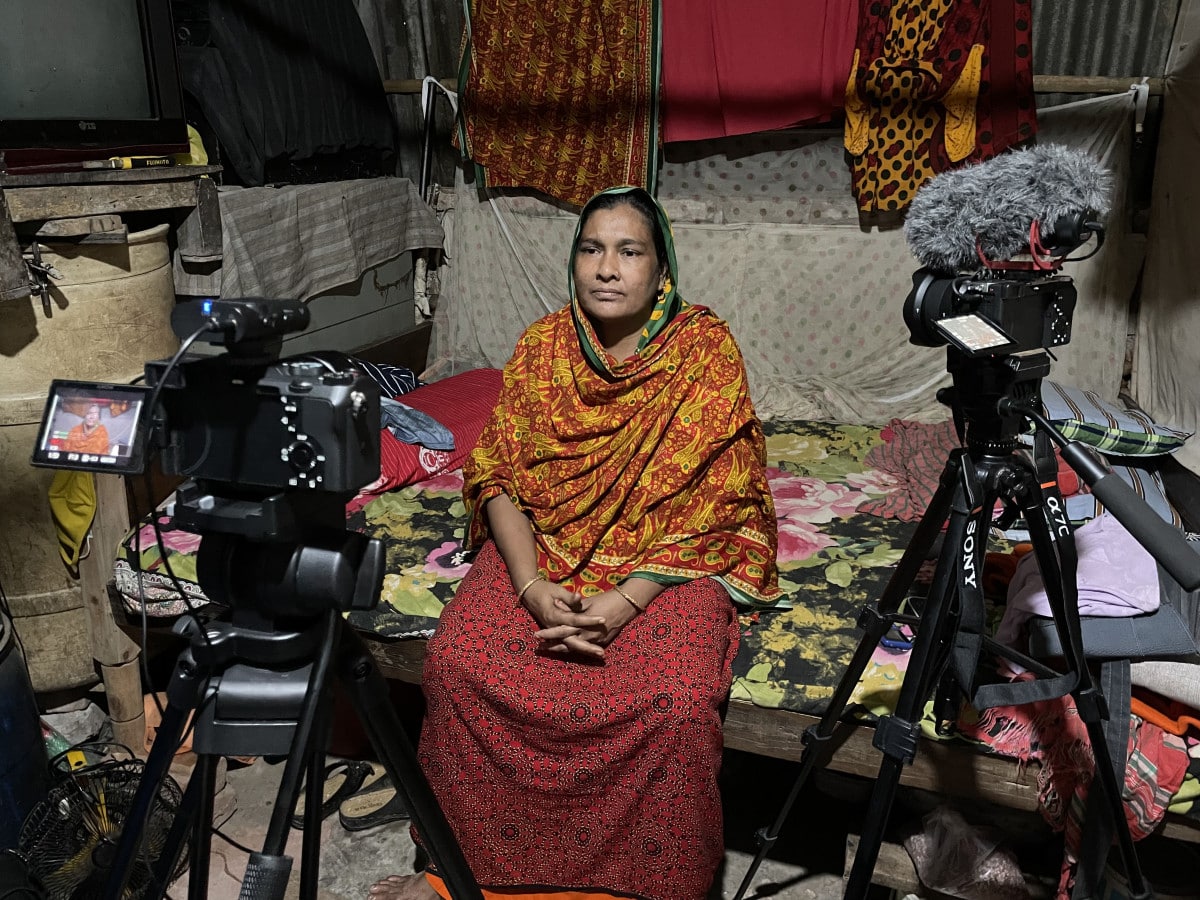
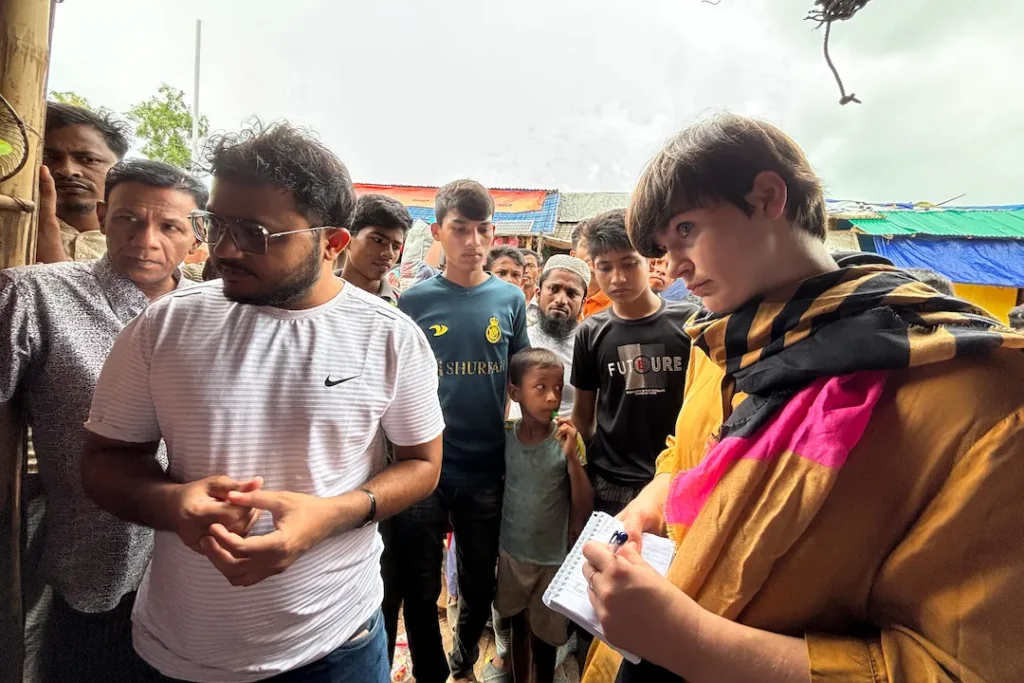
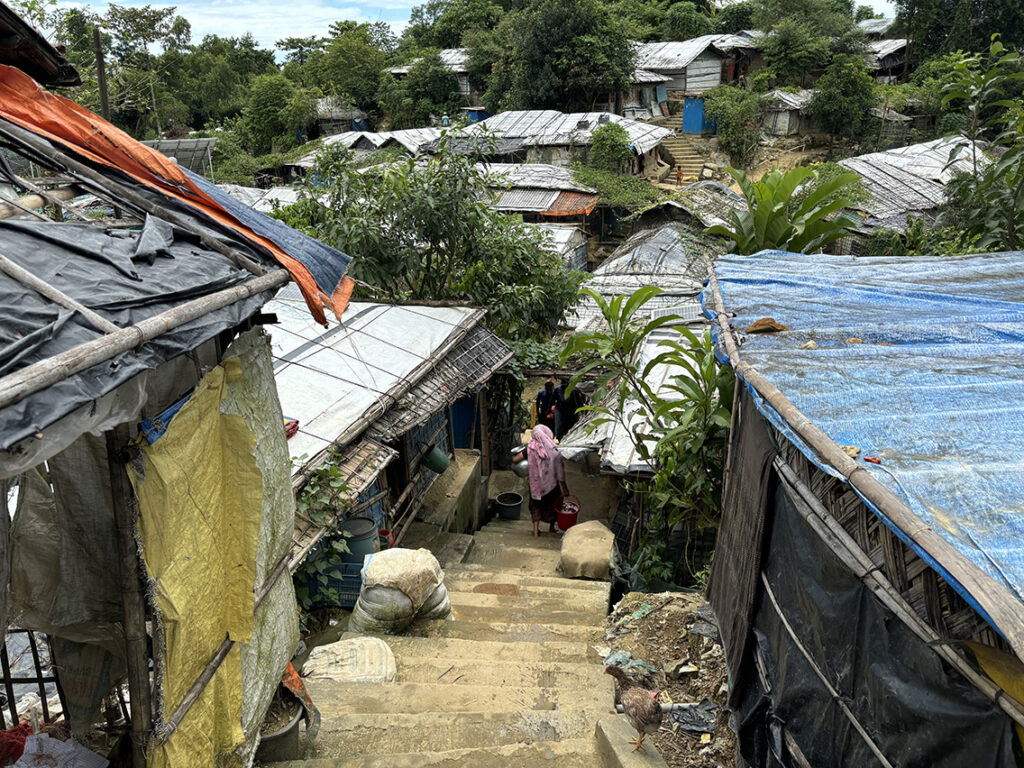
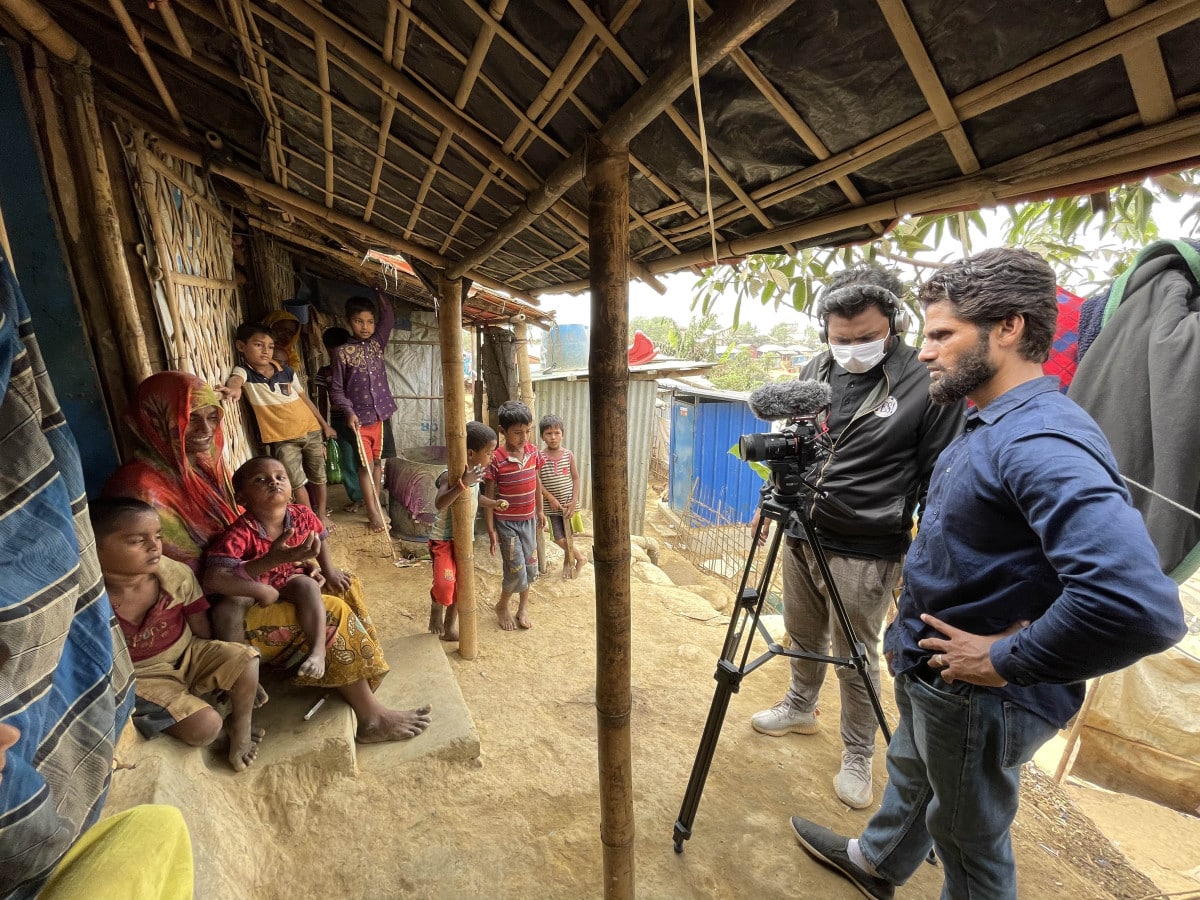
Filming inside the Rohingya refugee camps in Cox’s Bazar is not comparable to reporting in a conventional urban or disaster environment. Access is regulated, movement is supervised, interviews are sensitive, and every filming decision carries legal, ethical, and humanitarian implications.
For journalists, documentary filmmakers, broadcasters, NGOs, and international production teams, understanding how the system actually works is essential before arriving in Bangladesh.
As of 2026, Bangladesh hosts approximately 1.2 million Rohingya refugees across 34 camps in Cox’s Bazar, making it one of the world’s largest refugee settlements. Media access remains tightly coordinated through the Government of Bangladesh, the Refugee Relief and Repatriation Commissioner (RRRC), Camp-in-Charge (CiC) offices, and humanitarian agencies including UNHCR, IOM, UNICEF, and WFP.
This field guide explains:
How journalists obtain filming permission
What the RRRC approval process looks like in practice
What crews can realistically expect on the ground
Ethical rules for filming displaced communities
Security and logistical realities in 2026
Why experienced local fixers are essential for compliant production
Quick Answer: Can Journalists Film in the Rohingya Camps?
Yes — but only through coordinated approval.
To legally film in the Rohingya camps in Bangladesh, international journalists and documentary filmmakers typically need:
A Bangladesh journalist visa (J-Visa)
RRRC approval for camp filming
Camp-level coordination through the CiC office
Humanitarian or NGO facilitation where relevant
Pre-approved filming plans and supervised movement
Most approvals require 4–8 weeks depending on:
story sensitivity
current security conditions
crew size
humanitarian coordination schedules
documentation quality
Unapproved filming can result in revoked access, confiscated workdays, or future restrictions for the organization involved.
Why Filming in the Rohingya Camp Requires Special Access
The Rohingya camps sit inside a controlled humanitarian zone; you cannot walk in with a camera — you need preapproval.
The camps are administered by the Government of Bangladesh through the Refugee Relief and Repatriation Commissioner (RRRC) office, alongside UN and INGO coordination bodies. Each camp is managed by a Camp-in-Charge (CiC) — a government bureaucrat with extraordinary powers ranging from surveillance and security coordination to dispute resolution, NGO approval, movement control, and even convening mobile courts.
Due to security concerns, diplomacy, trafficking risk, and media sensitivity, filming is treated as a regulated activity, not a routine news assignment. Unlike urban Bangladesh, where you can film from public right-of-way, inside the Rohingya camp, you operate under permissions, escorts, and defined itineraries.
The security environment has deteriorated significantly. Abductions, sexual violence, forced recruitment by armed groups, drug trafficking, and extortion have created a pervasive climate of fear inside the camps. Between 2017 and 2024, law enforcement arrested 462 Rohingya in drug-related incidents, seizing over 1.3 million yaba tablets. These realities directly affect media access protocols.
Government and humanitarian coordination channels issue a pre-approved Rohingya camp filming permit that allows journalists and documentary filmmakers to legally film inside designated refugee settlements under supervision.
Who Issues Filming Permissions and in What Sequence
There is no single “master permit” for filming in the Rohingya camps.
Instead, journalists usually move through multiple approval layers.
Layer 1 — National-level clearance Authorization for the intention to film within the Rohingya context (journalist visa, formal letter of assignment, etc.)
Layer 2 — RRRC & Camp Coordination The RRRC office in Cox’s Bazar evaluates the filming request itself.
Step-by-Step RRRC Approval Process (2026)
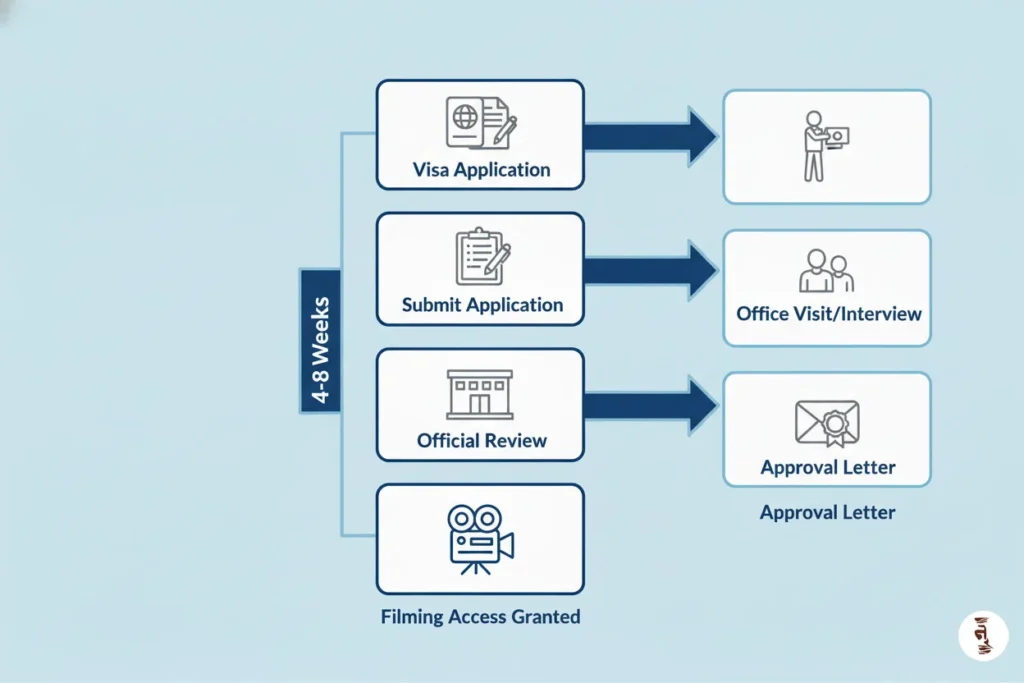
RRRC approval requires 4-8 weeks and involves a physical presentation at Cox’s Bazar RRRC office.
Step 1: Obtain Bangladesh Journalist Visa (J-Visa)
Apply through the Bangladesh High Commission/Embassy in your country. This grants legal entry to Bangladesh but does NOT grant camp filming access. Processing: 2-4 weeks.
Step 2: Prepare Formal Application Letter
Draft a detailed application specifying:
Story topic and angle
Specific camps you need to access (e.g., Camp 4, Kutupalong, Nayapara)
Proposed filming dates
Crew details and equipment list
Attach: passport copies, visa copies, commissioning letter from your media organization
Step 3: Physical Presentation at RRRC Office
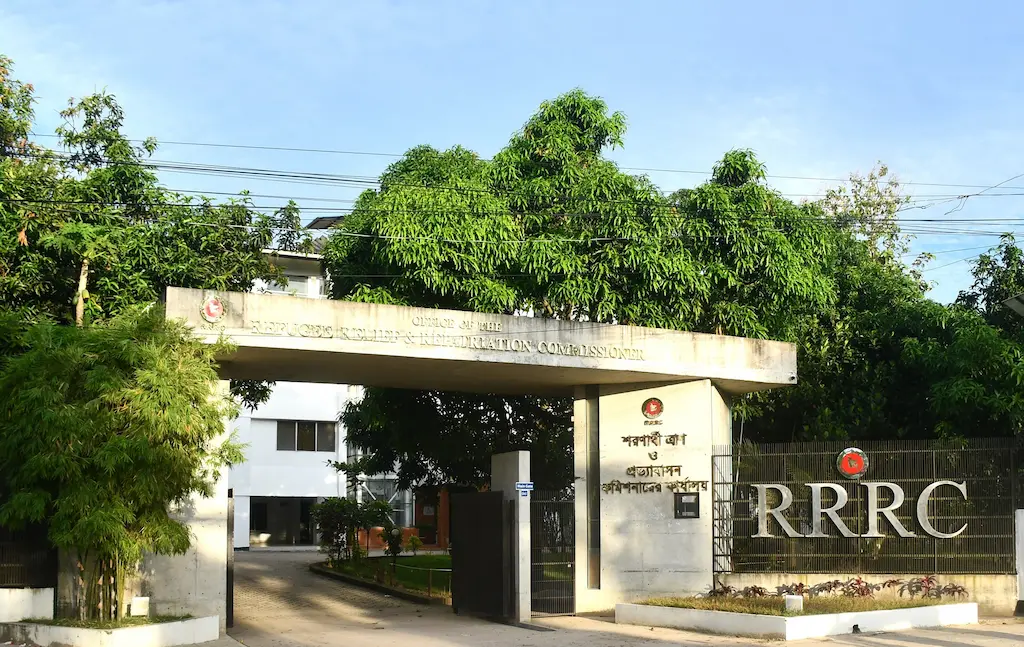
You or your fixer must physically present at the RRRC office in Cox’s Bazar (Office of the Refugee Relief and Repatriation Commissioner, Cox’s Bazar, Bangladesh — see rrrc.gov.bd for current contact). Remote applications are not accepted for media filming requests.
Step 4: RRRC Review & Host Coordination
The RRRC coordinates with relevant NGO/INGO hosts controlling your story sector (health, protection, education, etc.). This is where proper story framing matters most. The RRRC must approve the process, authorize zones and categories, and position officials as “observers” — though in a securitized environment where every movement depends on permission, observers are effectively architects of the process.
Step 5: Approval Issuance
Permitted dates
Authorized camp locations
Required escorts
Topic restrictions
Step 6: On-Ground Coordination
Even with RRRC approval, you still need:
Site-level clearance from Camp-in-Charge
Daily security briefings
Escort confirmation before filming begins
How Long Does Rohingya Camp Filming Approval Take?
Most productions should expect:
Process Stage
Typical Timeline
Journalist visa
2–4 weeks
RRRC review
2–6 weeks
Camp coordination
Several additional days
Full realistic workflow
4–8+ weeks
There is effectively no reliable fast-track process.
Crews attempting to organize filming less than three weeks before arrival frequently encounter delays or denials.
Case Study: In April 2018, a UK television crew faced last-minute permit complications after journalists were killed in the Rohingya refugee camp area, triggering additional approval layers not initially anticipated. Their fixer had to travel to Cox’s Bazar days early to resolve ground-level issues (source: Nree Productions client testimonial, 2018).
What Journalists Can Realistically Expect Inside the Camps
You will film on a predefined plan with escorts, time limits, and topic sensitivity — not a free-roaming vérité environment.
Expect planned movement, not discovery filming
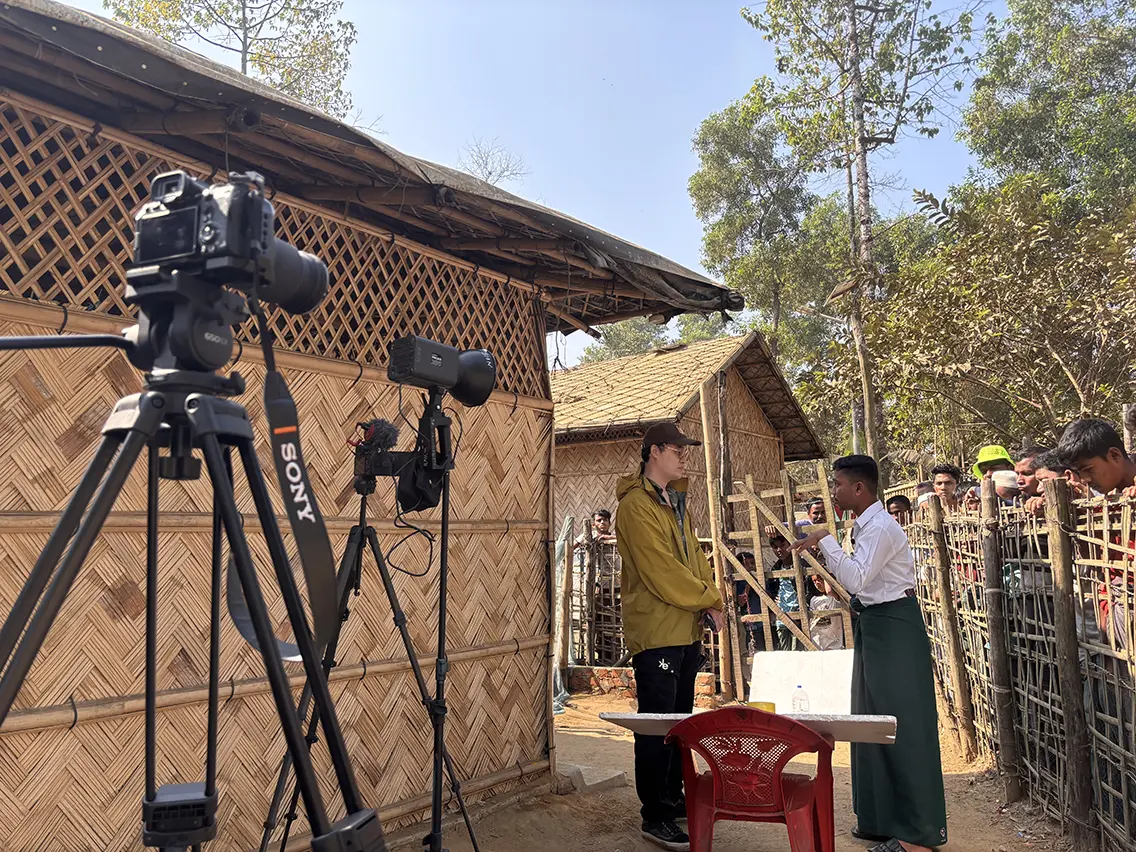
Journalists are escorted to pre-approved locations relevant to their brief. If you need spontaneity, you must script it into the approval request — not improvise on the ground.
Expect mediation of interactions
Interviews with refugees, teachers, health workers, or NGO staff are usually pre-cleared. Walk-up interviewing is generally discouraged because of reputational and consent risk inside a humanitarian site.
Expect topic constraints
Certain angles — trafficking, security forces, inter-camp conflict, camp governance — require additional justification or alternative treatment.
Drone filming is strictly prohibited in and around the camps for security and privacy reasons. Unauthorized drone use will result in immediate access termination.
Ethical Filming in a Refugee Context — What “Ethics” Really Means Operationally
Ethics is not a moral paragraph in a grant application — it is a set of on-camera decisions enforced on location.
Consent in displacement is not ordinary consent
Even when refugees agree to be filmed, their exposure may affect family safety, repatriation outcomes, or future asylum processes. Ethical filming means asking what follows the frame — not only what enters it.
Dignity over injury
Avoid imagery that codes people as spectacle: extreme close-ups of pain, handouts, tears, or queuing dependency. A technically legal shot can still be editorially violent.
Narrative harm is a measurable risk
As local journalist Mr. R recalls from 2017, “Most of them [Rohingya] were not used to seeing foreigners, Bangladeshis included — most hadn’t seen white people before”. The camera’s presence is inherently disruptive. Ahmed emphasizes interviewing survivors requires “lots of tippy toe” — recognizing the emotional weight of documenting trauma.
Ethical breach is not “breaking a rule” — it is producing material that will outlive the subject’s ability to defend themselves.
Why Local Fixers Are Essential
A fixer is not just a translator — they operationalize compliance, timing, and narrative safety.
Fixer as compliance buffer
A local fixer ensures your plan, people, and schedule match the approved scope so you don’t accidentally violate conditions that could terminate access for the entire crew.
Fixer as narrative filter
You might see a visually strong scene, but the fixer may know that filming it carries legal, ethical, or community consequences — they redirect before the harm, not after.
Fixer as cultural intelligence
Rohingya and Bangla cultural registers differ from international crews’ assumptions. Tone, greetings, camera distance, gendered interaction — these details decide whether a day succeeds or collapses.
Rohingya armed groups have become increasingly active, with recruitment intensifying amid growing hopelessness over repatriation prospects. A competent fixer monitors changing security conditions, knows which blocks or routes face current tensions, and can abort filming when risks escalate.
Every transition takes longer than outsiders assume. The camp is a live humanitarian environment, not a film set. You must budget for friction and delay.
Weather & terrain discipline
Heat, flash rain, slope, dust, and narrow density alter audio, crew posture, and lens choice. The camp is physically restrictive — not just procedurally restrictive.
Seasonal Constraints: Monsoon season (June-September) brings flooding risks and impassable routes. Cyclone season (April-May, October-November) can trigger evacuation protocols that shut down filming mid-assignment.
Understanding the 2026 Humanitarian Context: Funding Crisis & Access Impact
The 2026 funding crisis directly affects filming conditions and ethical considerations.
Funding for food support — currently at $12 per person per month — will run out in March 2026 absent new pledges. This deteriorating situation affects:
Filming Ethics: Documenting extreme deprivation carries higher narrative responsibility when subjects are facing imminent starvation.
Security Conditions: Worsening camp conditions are expected to fuel irregular movements of Rohingya to third countries and may lead security officials to advocate coercive repatriation tactics.
Access Restrictions: Dhaka may tighten media access if coverage is perceived as undermining repatriation messaging or embarrassing the government internationally.
Story Sensitivity: Topics like food security, aid cuts, and criticism of camp management face heightened scrutiny in 2026.
Risks of Non-Compliance Without Blame Language
Non-compliance doesn’t only risk the journalist — it jeopardizes future crews and trust inside the camp.
Here we use institutional, not accusatory framing. If a crew deviates from the agreed terms, escorts may pause filming or redirect. In repeated cases, future applications from the same organization can encounter stricter scrutiny. Restrictions exist not only for state control but to protect refugees from inadvertent exposure and to preserve humanitarian access continuity.
Case Example: In 2022, a European documentary crew using a Dhaka-based fixer without camp experience had their RRRC approval revoked on day 2 after filming in a protection-sensitive block without proper coordination. The footage was unusable, and the outlet was flagged for future requests. Cost: $40,000+ in wasted production expenses.
Restrictions exist not only for state control but also to protect refugees from inadvertent exposure and to preserve humanitarian access continuity. Non-compliance is not framed as punishment — it is framed as risk-mitigation for the zone.
Cost, Lead Time, and Crew Shape — What to Budget in 2026
Budget for time first, then service — the most expensive variable is delay, not people.
Lead Time
4-8+ weeks depending on:
Story scope and sensitivity
Supporting letters quality
Camp-side scheduling bandwidth
Current security conditions
RRRC administrative backlog
No fast-track option exists. Rush requests submitted less than 3 weeks before the desired filming dates are almost always denied.
Crew Shape
Small, disciplined crews gain faster access and smoother movement. Large camera units, gimbal ops, or multi-cam rigs signal “production,” not “journalism,” and may face slower clearance logic.
Costs are project-specific, but typical Rohingya camp projects incur:
Pre-Production Costs:
Fixer advance work: $500-1500
RRRC application coordination: $300-800
Translator pre-interviews: $200-600
Production Costs:
Daily fixer rate: $250-500/day
Security escort (if required): $100-200/day
Transport Cox’s Bazar-Camp: $80-150/day
Accommodation (Cox’s Bazar): $50-200/night
Hidden Costs:
Waiting days during approval: $300-500/day (accommodation, per diem)
Filming day extensions (common): $500-1000/day
Emergency permit amendments: $200-600
Reality Check: Most projects budget $8,000-15,000 for a 3-5 day shoot, excluding international crew travel. Delays cost more than shooting.
Camera Language, Audio Discipline, and Visual Conduct
Technical choices in a refugee environment are ethical choices — not aesthetic whims.
Keep the footprint light
Mirrorless body + compact prime zoom + light stick mic often outperforms shoulder-rig intimidation.
Treat microphones as intimacy devices
Booms and close-proximity lavs alter social pressure. Record with awareness that audio collection is a powerful act.
Avoid extraction shots
Slow dolly-in on suffering, zooms on tears, or “disaster beauty” wide-scapes may be publishable but are ethically regressive.
Frequently Asked Questions
Can I film in the Rohingya camp without a permit?
No. Entry with camera equipment requires coordinated authorization; unsanctioned filming risks immediate interruption and denial of future access.
How long does the Rohingya camp filming approval take?
Between 2–6+ weeks, depending on scope, assignment legitimacy, and scheduling constraints.
Are interviews with refugees allowed?
Yes, when pre-cleared and facilitated. Walk-up interviews are discouraged due to consent and narrative risk.
Do I need a fixer to film in the Rohingya camp?
Practically yes. A fixer aligns your crew with the authorized scope, manages sequencing, and protects you from accidental violations.
Can I film sensitive topics like trafficking or security?
Only with justification and relevant approval; such topics are treated as restricted angles requiring additional procedural care.
Is drone filming allowed in the Rohingya camp?
No. Drone use is restricted in and around the camps for security and privacy reasons.
Is there any ethical guideline specific to refugee filming?
Yes. Humanitarian media guidance prioritizes consent integrity, dignity framing, and narrative non-harm for displaced populations.
Can I access the camps on weekends or holidays?
No. The RRRC office operates on government working days only. Camp access for filming is typically not granted on Fridays (weekly holiday) or national holidays.
What happens if my RRRC approval expires mid-shoot?
Filming must stop immediately. Extensions require new applications and cannot be processed on-site. Always build a 2-3 day buffer into approval periods.
Final Words
Filming in the Rohingya camp in 2026 is not a casual “go and shoot” proposition. It is a regulated, escorted, ethically high-accountability environmentinside the world’s densest refugee settlement, facing unprecedented funding shortfalls and security deterioration.
As of December 2026, the camps face their most precarious moment since 2017. With food funding ending in March 2026 and armed groups intensifying recruitment, the ethical and security calculus of filming has never been higher.
Script ethics into camera decisions before arriving
Honor the humanitarian logic of access
When done responsibly, journalism inside the Rohingya camp produces public record — not extraction — and preserves future access for those who will document after you.
Nree Productions provides end-to-end production services in Bangladesh, including RRRC coordination, experienced fixers, and ethical camp access facilitation.
Sohan Rahat
Sohan is a documentary filmmaker and photographer exploring where the climate crisis meets human lives. His work focuses on communities living on the frontlines of ecological change, tracing stories where displacement, resilience, and the natural world are inseparable.
Currently, Sohan is developing a documentary in the Sundarbans, weaving together myth, sacred traditions, and lived realities in the world’s largest mangrove forest. An Earth Journalism Fellow (2025), trained at Deutsche Welle and selected for Oxford University’s Climate Journalism Network, he approaches visual storytelling as both witness and reciprocity with the more-than-human world.
He has documented Asian elephants stranded in the fragmented hills of Cox’s Bazar amid the Rohingya refugee crisis, revealing how human and ecological loss echo one another. As a field producer for Earthrise and country producer for Seat at the Table (screened at COP26), he amplifies voices often excluded from global climate conversations.