
Hiring the right fixer in Bangladesh can make or break your project. Whether you’re a journalist, researcher, documentary producer, or content creator, a professional fixer serves as your local producer, cultural bridge, permit coordinator, and safety advisor—all in one. From the dense streets of Dhaka to the remote Sundarbans mangroves and the sensitive Rohingya refugee camps in Cox’s Bazar, the right person on the ground transforms complex logistics into smooth operations.
This guide explains everything you need to know about how to hire a fixer in Bangladesh: what to look for, where to find them, how to vet their experience, and how to navigate the country’s unique regulatory and cultural landscape.
What is a Fixer in Bangladesh?
A fixer is a local production coordinator who handles permits, logistics, crew, translation, and cultural navigation for international media teams.
International productions require local expertise to navigate Bangladesh’s complex landscape. Your fixer in Bangladesh serves as that critical ground-level partner—bridging language gaps, interpreting cultural contexts, and unlocking access to locations and communities that would otherwise remain closed to outsiders.
Moreover, these professionals coordinate every aspect of production logistics, from securing permits to managing crews and ensuring cultural sensitivity.
Key Responsibilities Include:
- Pre-production planning: Research, location scouting, risk assessment
- Permit acquisition: Filming licenses, visa support, drone authorizations
- Crew coordination: Sourcing cameramen, sound engineers, translators
- Logistics management: Transport, accommodation, equipment rentals
- On-set support: Real-time problem-solving, community liaison
- Safety protocols: Threat assessment, secure routing, emergency contacts
These fixer responsibilities are part of a broader production workflow, which we explain step by step in our Filming in Bangladesh guide for foreign crews.
Why You Need a Fixer in Bangladesh
Bangladesh’s bureaucracy, cultural sensitivities, and infrastructure challenges make local expertise essential for successful productions.
Indeed, Bangladesh offers extraordinary visual storytelling opportunities—from Cox’s Bazar’s 120-kilometer beach to climate-impacted river islands.
Nevertheless, filming here presents unique challenges:
Regulatory Complexity
First, foreign journalists require special visas. Similarly, filming permits involve multiple government agencies. Processing times range from two weeks to over 30 days, depending on location sensitivity.
Cultural Navigation
Additionally, Bangladesh’s conservative Muslim-majority culture requires careful community engagement. Moreover, regional dialects vary significantly.
For example, a Dhaka-based interpreter may struggle in rural Sylhet or coastal Chittagong.
Infrastructure Realities
Furthermore, according to World Bank data from 2024, road traffic accidents claim over 24,000 lives annually in Bangladesh. Therefore, vetted drivers and secure transport aren’t luxuries—they’re necessities.
Equipment Restrictions
Meanwhile, importing drones remains illegal at customs. Additionally, certain camera equipment triggers security scrutiny. As a result, local rental networks and licensed operators become essential resources.
How to Find and Vet a Fixer in Bangladesh
Vet fixers based on international media experience, regional expertise, and proven track records with outlets like BBC or National Geographic.
1. Selecting Your Fixer
Notably, not all fixers possess equal capabilities. When evaluating candidates, prioritize:
Proven International Experience
Specifically, request client references from recognized media organizations. For instance, fixers who’ve worked with Channel 4 News, Al Jazeera, or National Geographic understand editorial standards and deadline pressures.
Regional Specialization
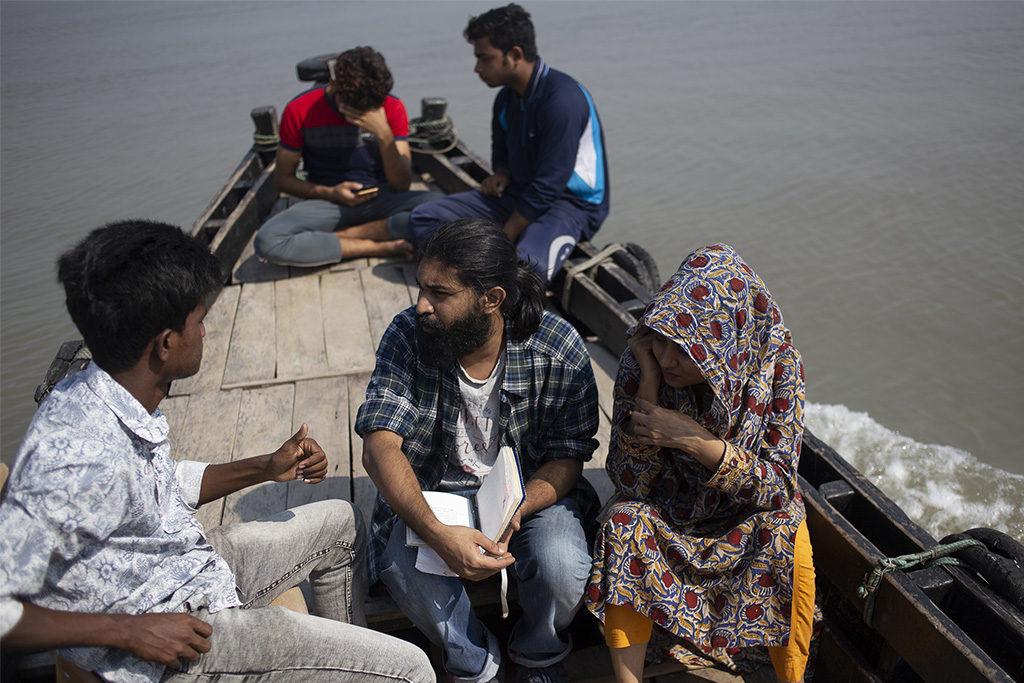
Bangladesh’s geography demands location-specific knowledge. For example, a Sundarbans specialist understands tidal patterns and wildlife regulations. Meanwhile, a Cox’s Bazar fixer navigates Rohingya camp protocols.
Technical Competence
Additionally, ask about their equipment inventory and crew network. Can they source RED cameras? Do they maintain relationships with licensed drone pilots?
2. Journalist Visa Applications
Importantly, Bangladesh requires journalist visas for media professionals. The process involves:
- Obtaining an invitation letter from a registered Bangladeshi organization
- Submitting project descriptions and crew lists
- Processing through Bangladeshi embassies (typically 2–4 weeks)
Pro tip: Start visa applications 6–8 weeks before travel. Unfortunately, rush processing rarely succeeds in Bangladesh’s bureaucratic system.
You may also like our guide on Journalist VISA and permit requirements for Bangladesh
3. Location Scouting and Risk Assessment
Effective fixers conduct preliminary site visits before full crew deployment. Specifically, they evaluate:
- Seasonal considerations: Monsoon flooding (June–September) restricts access to many rural areas
- Community readiness: Local permissions and cultural protocols
- Security conditions: Political tensions, natural disaster risks
- Technical feasibility: Power availability, cell coverage, nearest medical facilities
Production: On-the-Ground Support Services
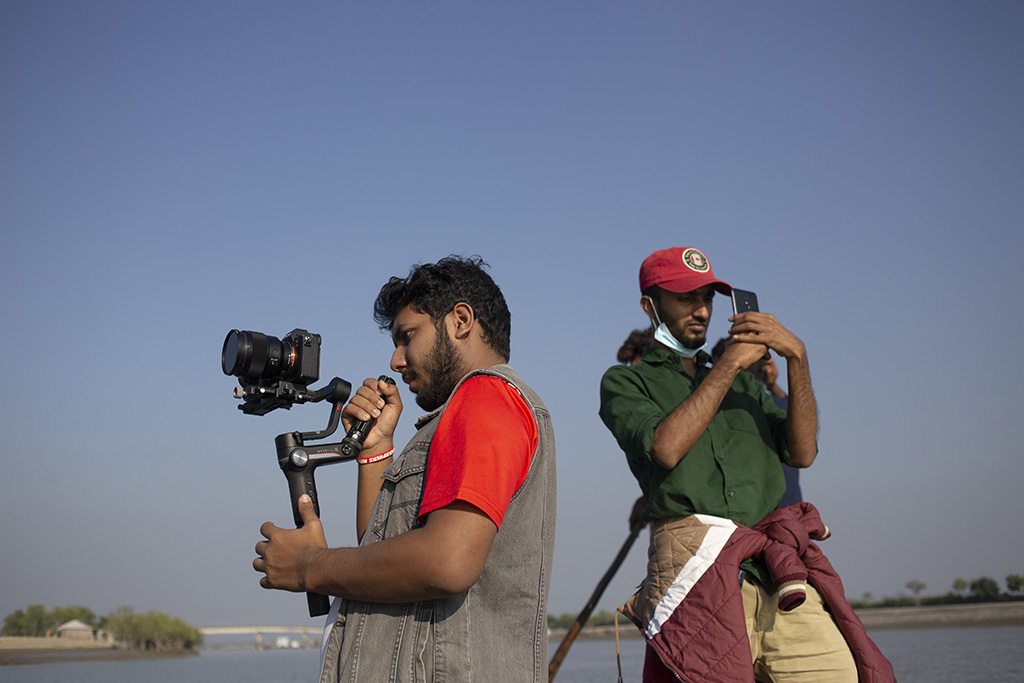
During shooting, fixers coordinate daily logistics, manage crew-community relations, and provide real-time translation and problem-solving.
Crew Assembly
Need additional hands? Professional fixers source:
- Cinematographers familiar with international production standards
- Sound recordists with broadcast-quality equipment
- Line producers who manage daily schedules
- Field researchers with subject-matter expertise
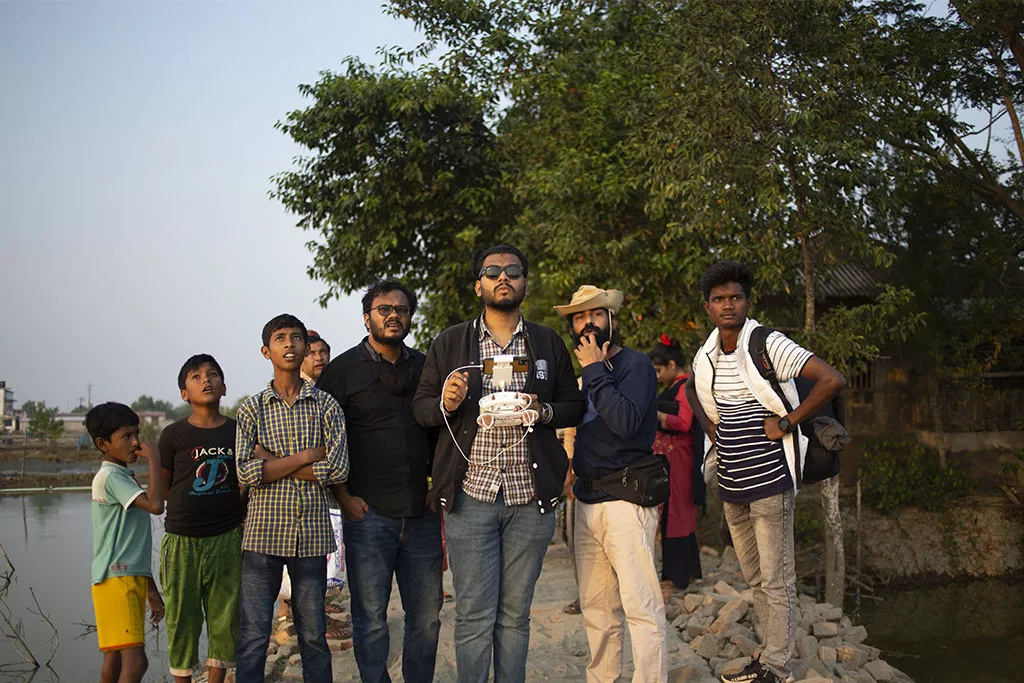
Notably, this service becomes critical for remote shoots. For example, filming in the Sundarbans requires boat crews, forest guides, and wildlife permissions—all coordinated simultaneously.
Safe Accommodation and Transport
Fundamentally, safety underlies every logistical decision. Vetted fixers arrange:
Accommodation Near Shooting Locations
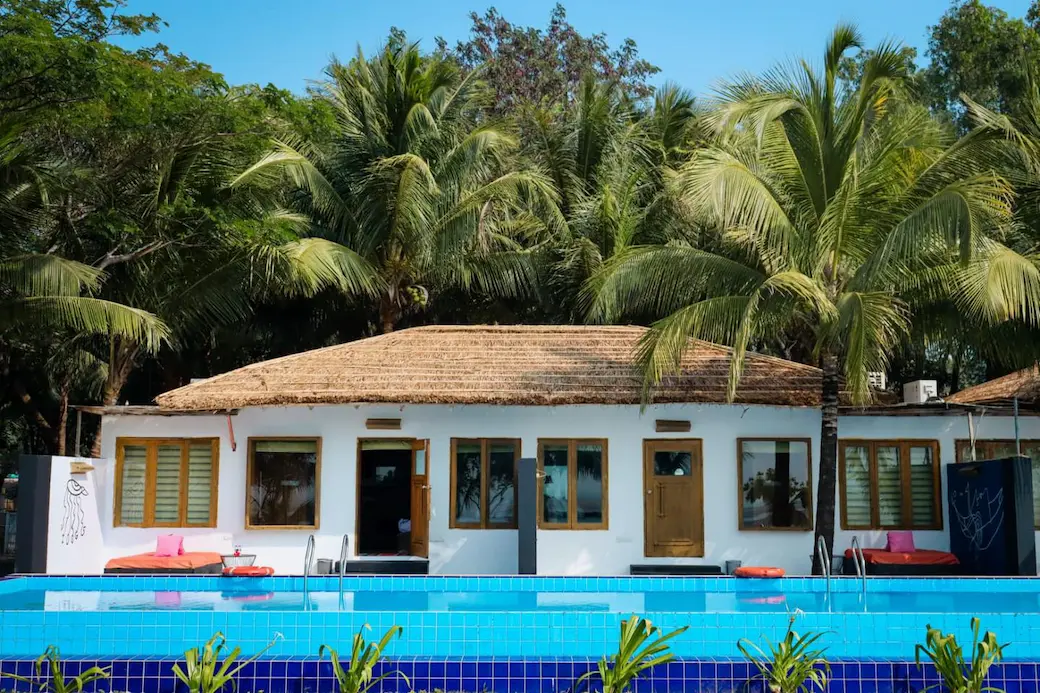
Typically, hotels are selected based on security, proximity, and backup power availability. In rural areas, this might mean guesthouses with generator access rather than luxury resorts.
Reliable Vehicle Fleet
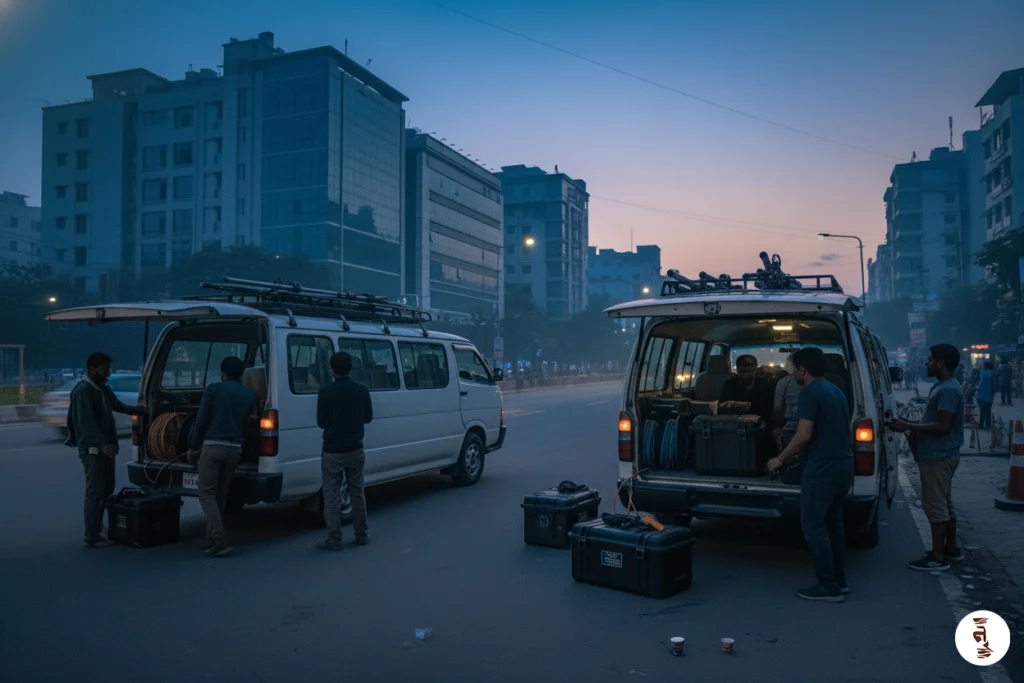
Given Bangladesh’s road safety challenges, fixers maintain relationships with professional drivers. Subsequently, vehicles undergo safety checks, and drivers receive briefings on equipment handling and route planning.
Filming Permits by Location Type
Understanding Permit Requirements
Different locations require distinct permits:
| Location Type | Permit Authority | Processing Time |
| National parks | Forest Department | 7–14 days |
| Heritage sites | Department of Archaeology | 10–21 days |
| Border areas | Ministry of Home Affairs | 21–45 days |
| Rohingya camps | RRRC (Refugee Relief) | 14–30 days |
Furthermore, fixers navigate these bureaucracies, submitting correct documentation and following up on approvals.
Equipment and Gear Rentals
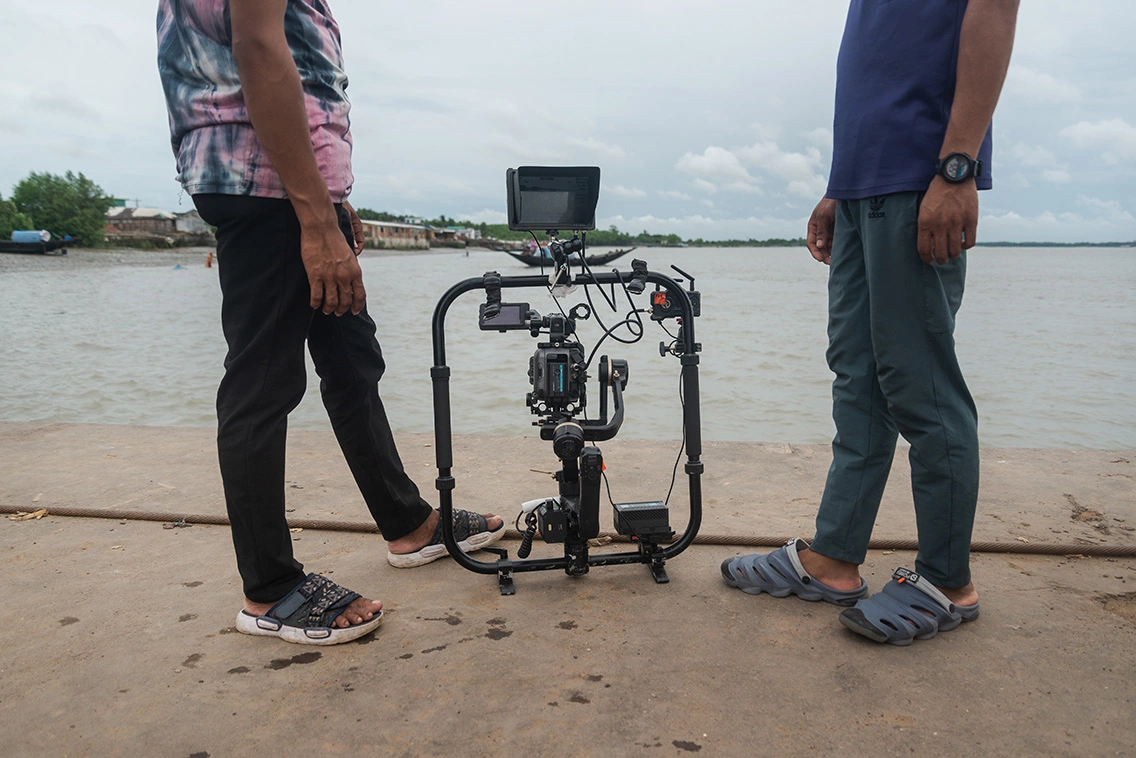
Generally, importing equipment into Bangladesh triggers customs delays and duties. Instead, rent locally:
- Broadcast & High end cinema cameras (Sony FX3, FX6, FX9, Canon C300)
- Lighting kits (LED panels, tungsten spots)
- Audio packages (Zoom Recorders, Sennheiser wireless, boom mics)
- Stabilization gear (gimbals, tripods, sliders)
Important: Availability fluctuates during peak season (October–March). Book equipment 3–4 weeks ahead.
Flying Drones in Bangladesh: Complete Process
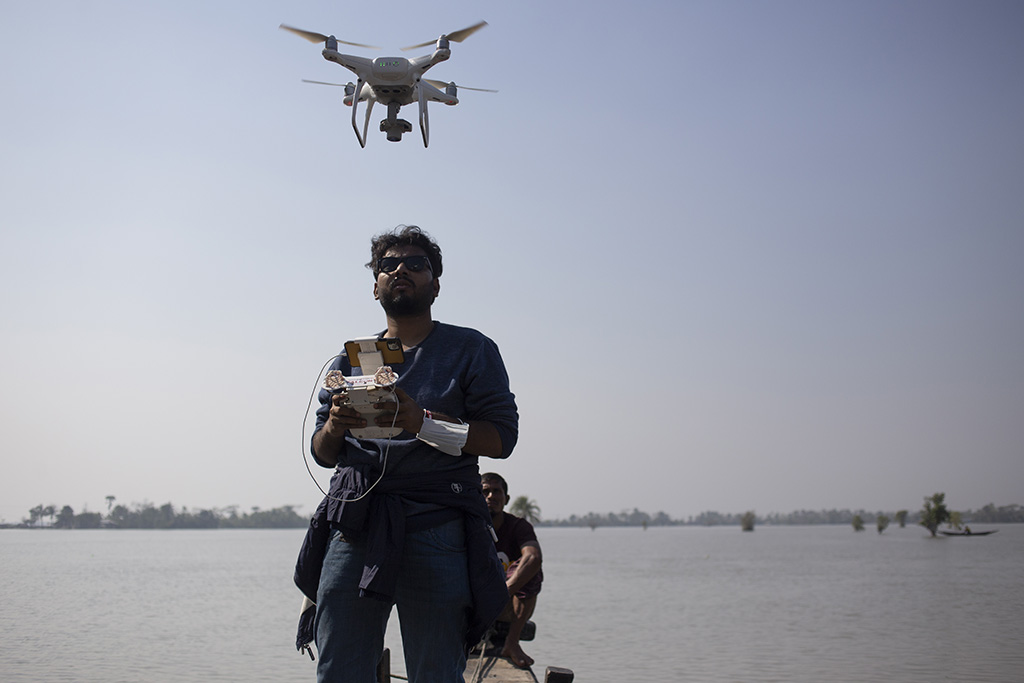
Importing drones is illegal; permits require 30+ days; use licensed local operators or pre-approved aerial footage archives.
Drone regulations in Bangladesh are strict:
The Rules by CAAB:
- No imports: Customs authorities confiscate drones at airports
- Permit required: Civil Aviation Authority approval is needed for all flights
- Timeline: 30–45 days minimum processing
- Documentation: Flight plans, pilot licenses, insurance certificates, project justifications
The Solution:
Work with fixers who maintain licensed drone operators and pre-cleared aerial footage libraries. This approach bypasses lengthy approval processes for time-sensitive projects.
According to the Bangladesh Civil Aviation Authority’s 2024 guidelines, unauthorized drone flights carry fines up to 50,000 BDT ($450 USD) and equipment seizure.
Special Considerations: Accessing Sensitive Locations
Rohingya camp filming requires RRRC permits, community fixers, and strict protocol adherence—typically 2–3 weeks of preparation.
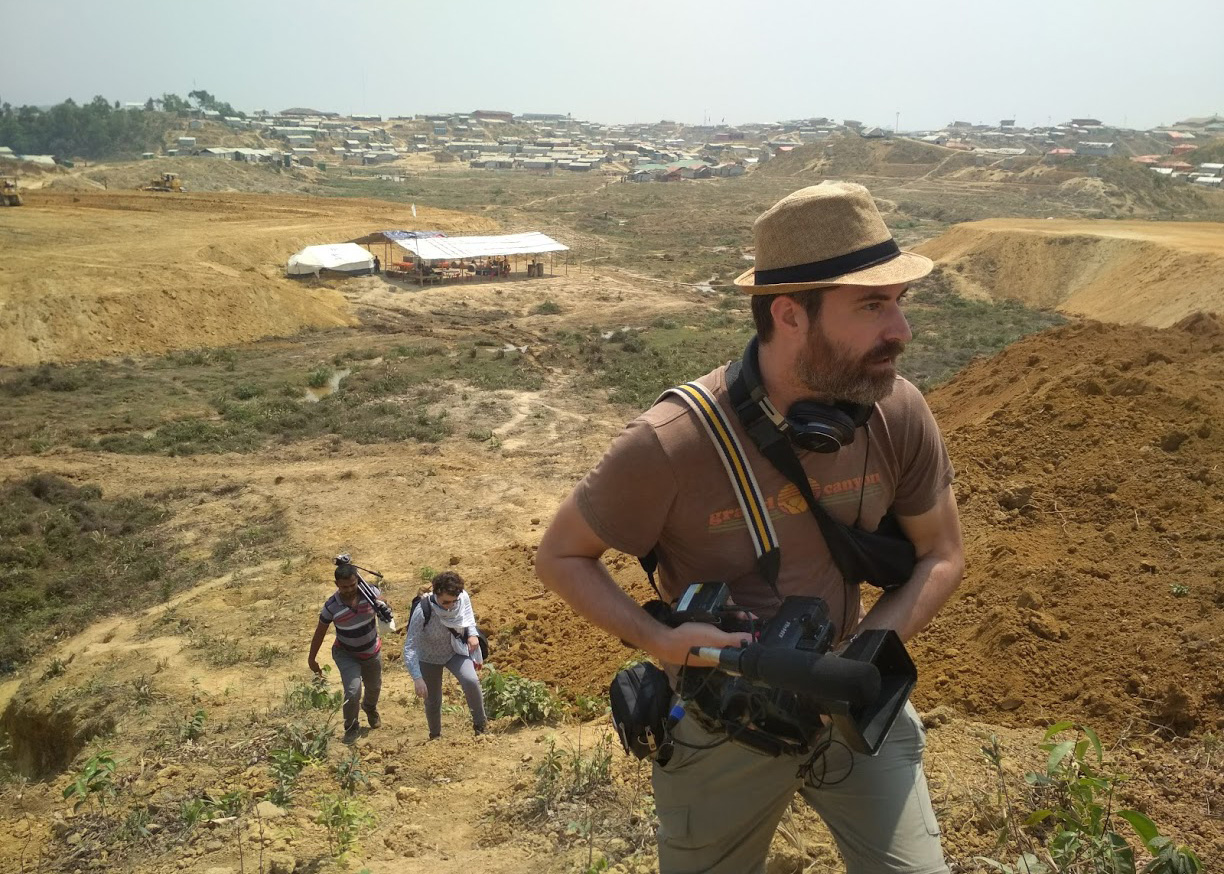
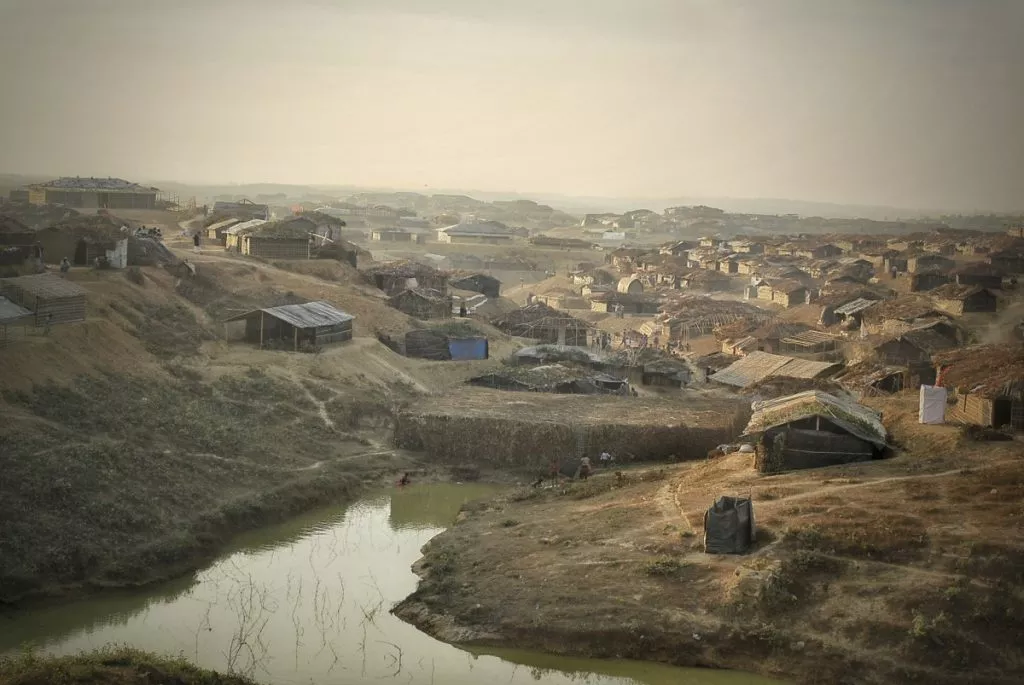
Since 2017, over 900,000 Rohingya refugees have fled Myanmar to Bangladesh’s Cox’s Bazar district. Consequently, this humanitarian crisis attracts significant international media coverage.
Access Requirements:
Step 1: RRRC Permit
The Refugee Relief and Repatriation Commissioner (RRRC) controls camp access. Applications require:
- Journalist VISA
- Crew credentials
- Proper Application for filming
Step 2: Community Liaison
Beyond official permits, community trust matters. Experienced fixers maintain relationships with Rohingya leaders, NGO coordinators, and camp administrators.
Step 3: Cultural Protocols
Respect religious customs, obtain individual consent for interviews, and avoid sensationalizing trauma. Professional fixers brief crews on these sensitivities.
Step 4: Security Considerations
Camp environments present safety challenges. Fixers arrange security-cleared transport and monitor evolving conditions.
Post-Production Support Services
Fixers provide translation, transcription, and editing services to refine raw footage into publishable content.
Translation and Transcription
Language services include:
Field Interpretation
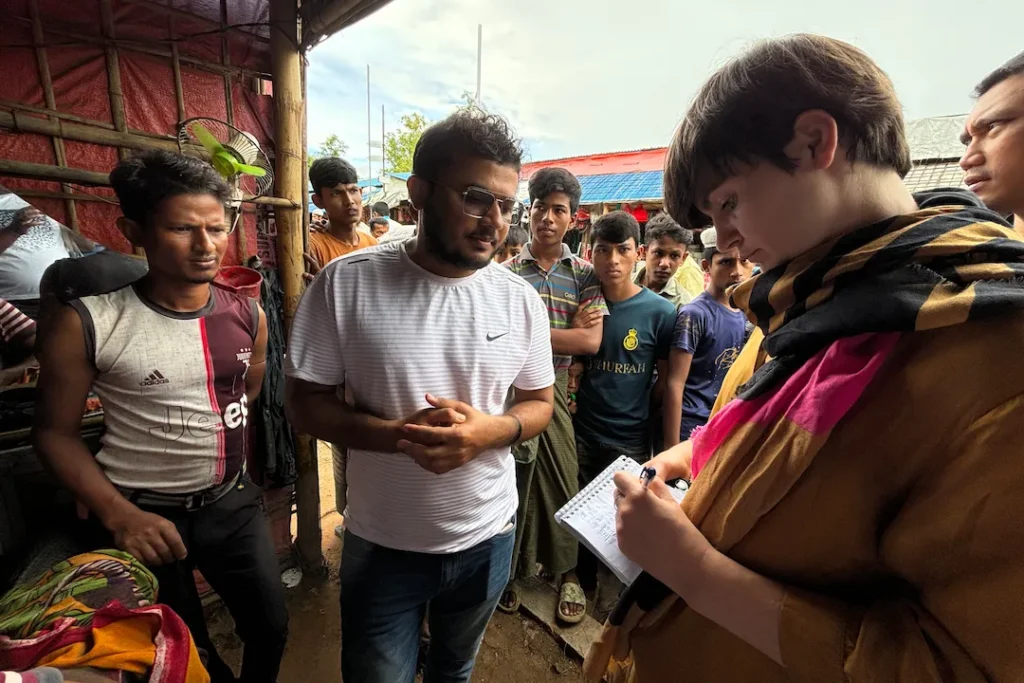
Real-time Bangla–English translation during interviews. Moreover, multilingual interpreters handle minority languages (Rohingya, Chittagonian, Sylheti).
Video Transcription
Time-coded subtitles for documentaries and news segments. This service ensures accurate translation that syncs with footage.
Audio Transcription
Interview recordings converted to written documents. Useful for fact-checking and script development.
Document Translation
Research papers, government documents, and archival materials were translated for background research.
Video Editing Assistance
Some fixers offer basic editing support:
- News segment assembly
- Subtitle file creation
- Rough cut reviews with cultural context notes
Frequently Asked Questions About Hiring a Fixer in Bangladesh
Day rates typically range from $250–$500 USD, depending on experience level, project complexity, and services included. In addition, Multi-week projects often negotiate package rates.
Standard location permits require 10–21 days. However, sensitive areas like border regions or Rohingya camps may take 30–45 days. Start the permit process 6–8 weeks before shooting.
With proper planning and local expertise, filming is generally safe. Nevertheless, road traffic poses risks. Professional fixers arrange vetted drivers and secure routing.
While November–February offers optimal weather conditions, your filming schedule should align with your story requirements. Ultimately, monsoon season (June–September) can provide dramatic visuals for climate stories despite logistical challenges. A skilled fixer in Bangladesh helps you plan strategically regardless of the season. Nree Productions specializes in year-round production support tailored to your project needs.
Yes. Bangladesh requires journalist visas for all media professionals, including documentary filmmakers. Furthermore, tourist visas do not permit commercial filming activities.
Professional fixers speak fluent Bangla and English. Additionally, many also coordinate interpreters for regional dialects like Chittagonian, Sylheti, and Rohingya.
Conclusion
Hiring the right fixer in Bangladesh is the single most important decision you’ll make for your project. The right person handles bureaucracy, builds community trust, coordinates logistics, and keeps you safe—all while you focus on the work itself.
Take your time vetting candidates. Ask hard questions. Check references. And start the process early.
When you find a fixer who understands both international standards and local realities, Bangladesh opens up in ways that would otherwise remain impossible.
Ready to start your Bangladesh production? Connect with experienced fixers who understand international media standards and local realities. Your story deserves expert support from the ground up.
