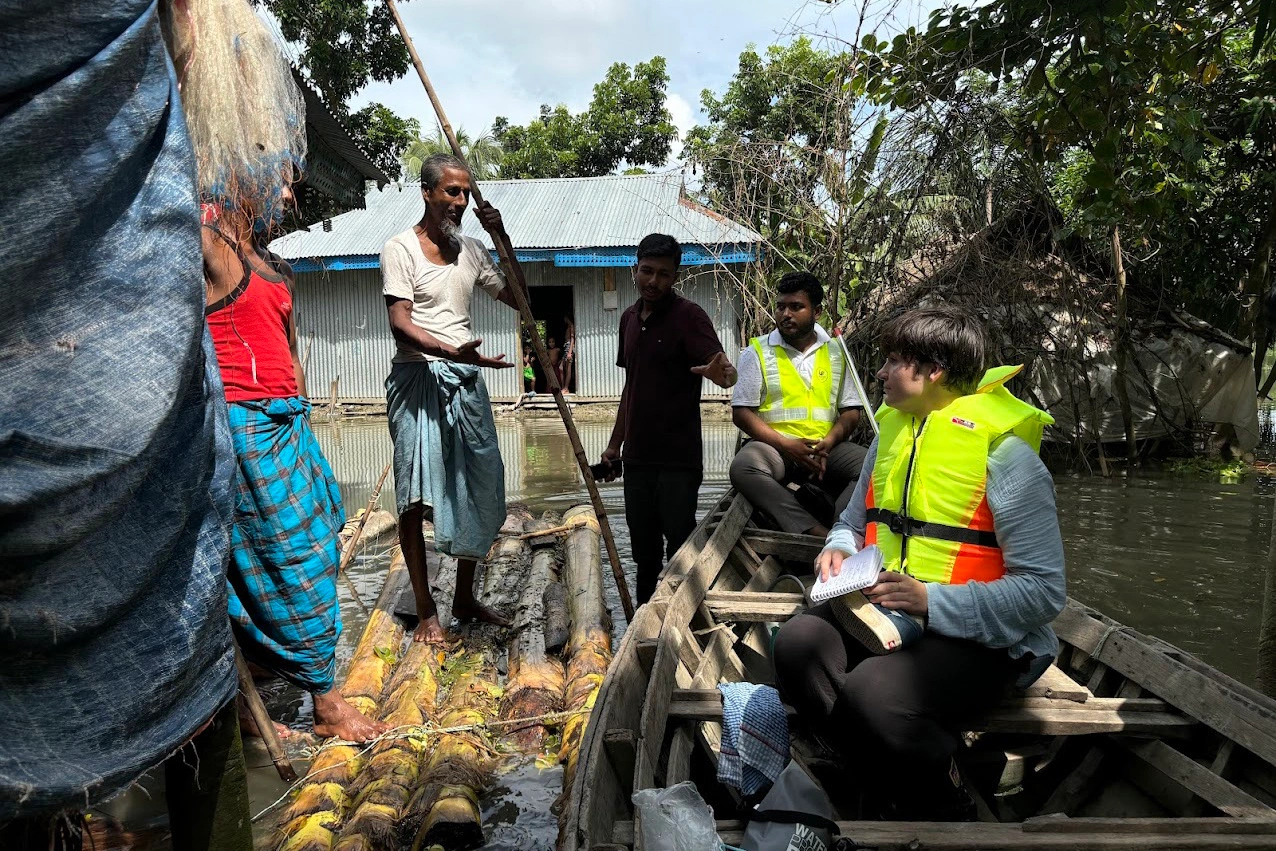
If you’re wondering why hire a fixer in Bangladesh, the answer is simple: Bangladesh is a generous, story-rich country — but it unfolds on its own terms. Even with perfect permits and a solid plan, the reality on the ground runs on relationships, not just paperwork. That’s not a barrier; it’s an invitation to work with someone who knows the rhythm.
Foreign productions often arrive expecting a predictable process — and what they discover instead is a warm, dynamic landscape where access opens through trust, not just approvals. A permit that looks straightforward on paper may need a conversation, not just a submission. An authority might pause filming not out of resistance, but because the right introduction hasn’t happened yet. An interview that seems confirmed can quietly slip away without a local relationship holding it in place.
None of this is hostile. It’s simply how things work here — and with the right fixer, it all works in your favour. They turn uncertainty into momentum, so you experience Bangladesh not as a challenge to navigate, but as a place ready to welcome your story.
Why hire a fixer in Bangladesh: it’s not a plug-and-play production environment
Bangladesh is safe and welcoming, but systems are informal, layered, and relationship-based — a fixer bridges what official processes do not resolve in time.
Even when you arrive with the right documents, you quickly discover there are three layers of reality in Bangladesh:
- Official rules — what ministries and embassies publish
- Operational rules — how agencies, police, camp authorities, ports, and local offices actually apply those rules
- Situational rules — what happens under tense, sensitive, or high-visibility circumstances
For example, reaching a coastal village after a cyclone, filming near a strategic port, or entering a Rohingya-adjacent corridor may technically be legal, yet authorities may still stop your crew if someone trusted on the ground has not arranged an official escort, prior notification, or local clearance..
A fixer is not just a language bridge — they are a friction-removal system for all three layers.
For a deeper overview of how fixer services work from start to finish, you may also like our full guide: Fixer in Bangladesh: A Complete Guide to Hiring and Filming
A fixer prevents predictable failures that foreign crews repeat

Most production breakdowns in Bangladesh are not accidents — they happen in the same recurring choke points when crews work without a fixer.
Some of the most common breakdowns foreign teams face when they attempt to self-navigate Bangladesh:
- Permits arrive, but you cannot “use” them because no one briefed the local police station or field authority
- Authorities stop filming midday because you did not pre-coordinate the sensitive location with district officials
- Interviewees withdraw when a camera arrives without a trusted local familiar face
- Transport locks down in coastal or border belts due to sudden security orders not visible online
- Access windows close because the wrong hour/day/person was chosen to approach
These are not random. They are repeatable failure patterns that a professional fixer knows how to pre-empt because they sees them every season.
What a fixer actually does (beyond “translating”)
Fixers do not just interpret — they engineer access, anticipate friction, and keep a shoot executable from briefing to wrap.
Most foreign teams assume a fixer is like a bilingual PA. In Bangladesh, a fixer is closer to a field-side producer who de-risks the assignment. Typical responsibilities include:
Pre-production
- Identifying realistic access paths (not only the “ideal” ones)
- Advising on what is filmable without raising red flags
- Securing permits, letters, camp access, and district coordination
- Pre-interviewing characters to avoid collapse on shoot day
- Planning travel windows around weather, politics and closures
- Building Plan B/C routes and alternates
In the field
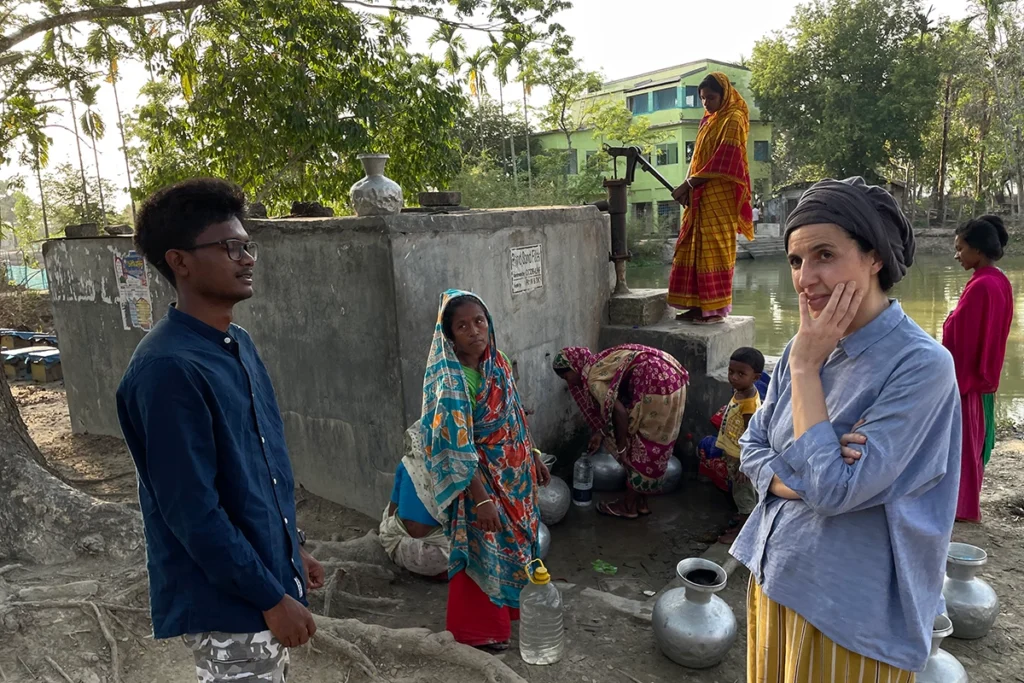
- Negotiating live with on-ground authorities
- Running stakeholder diplomacy so filming does not stop
- Translating culturally — not only linguistically
- Managing local expectations so scenes stay authentic
- Shielding the crew from confrontations and escalation
- Keeping the schedule fluid when reality moves
Post / Wrap
- Verifying legal safe-use of captured material (esp. minors, camps, institutions)
- Securing additional documents if broadcasters request clearance proof
- Handling call-backs, follow-ups, and ethical checks
A journalist fixer in Bangladesh sits at the intersection of access, navigation, compliance and culture — not at the edge of the team, but at the spine.
How far in advance should you book a fixer in Bangladesh?
Book 3-4 weeks minimum for standard shoots; 6-8 weeks for anything involving camps, permits, or sensitive locations.
The lead time you need depends on what layers of access your story requires:
Standard timeline by production type
Low-complexity shoots (Dhaka B-roll, general interviews, public spaces)
- Minimum:1-2 weeks
- Recommended: 2-3 weeks to secure quality interviewees and optimal scheduling
Medium-complexity shoots (NGO access, climate-affected villages, institutional filming)
- Minimum: 3-4 weeks
- Recommended: 4-6 weeks for relationship-building and clearance coordination
High-complexity shoots (Rohingya areas, ports, border zones, government infrastructure)
- Minimum: 6-8 weeks
- Recommended: 8-12 weeks for multi-layer permit stacking and escort arrangements
Crisis/breaking news response
Fixers with active networks can mobilize in 24-48 hours, but access quality depends on existing relationships and current ground conditions. For context on seasonal access challenges, cyclone impacts, and district-level advisories, ReliefWeb maintains current humanitarian updates for Bangladesh.
What happens if you book too late?
Common consequences of last-minute booking:
- Permits may not clear in time, forcing you to film only in unrestricted zones
- Key interviewees unavailable or unprepared
- Higher costs for rush coordination
- Experienced fixers become unavailable (clients book them weeks ahead)
- Inability to secure district-level notifications for sensitive areas
- You may have no time to scout Plan B locations
Pro tip: Contact a fixer even before you have final dates. Early consultation helps you understand what’s realistic for your timeline and story angle, and allows the fixer to begin soft-coordination with gatekeepers while details are finalized. Foreign journalists should also review journalist visa requirements early in the planning process.
When you do — and do not — need a fixer in Bangladesh
Not every shoot requires a fixer — but anything intersecting government, displacement, ports, climate-risk zones, or public authority does.
DO vs DON’T Need a Fixer in Bangladesh
| Scenario | Do I need a fixer? | Why |
| Filming generic city B-roll in Dhaka streets | Not strictly required | Public spaces allow filming; the risk is mostly the crowd and permission ambiguity |
| Filming Rohingya-adjacent areas/security belts | Yes, required | Layered jurisdiction, on-spot checks, and escort/briefing are often needed |
| Interviewing climate-affected villagers | Strongly advised | Access is trust-mediated; characters may retreat without a local bridge |
| Shooting in ports/infrastructure/camps | Yes, required | Shooting in ports/infrastructure/camps |
| Working with ministries / NGOs / schools | Yes, required | Institutional gatekeepers expect a local responsible party |
This clarity itself is part of the fixer service — most crews don’t even know which side of this table they fall until they are already on location.
Regional considerations: Does location change fixer requirements?
Dhaka and major cities
Generally, more straightforward. A fixer is valuable but not always mandatory for generic B-roll or pre-arranged institutional interviews. However, even in Dhaka, filming government buildings, infrastructure, or protests requires coordination.
Cox’s Bazar and Rohingya-adjacent zones
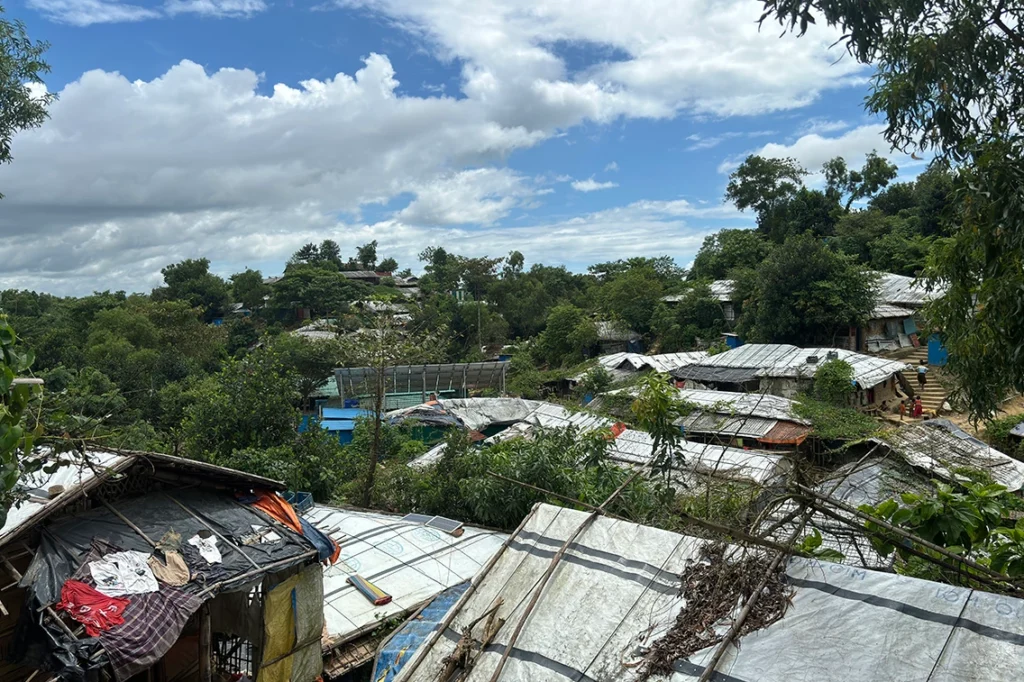
Cox’s Bazar and Rohingya-adjacent zones
Fixer is essentially mandatory. This is the most heavily regulated area for media. Authorities track all movement, and filming without proper clearance and escort will be stopped. The UNHCR coordinates refugee operations in Cox’s Bazar, and media access requires coordination through RRRC (Refugee Relief and Repatriation Commissioner) with proper advance notice.
Coastal and climate-affected regions (Khulna, Barisal, Patuakhali)
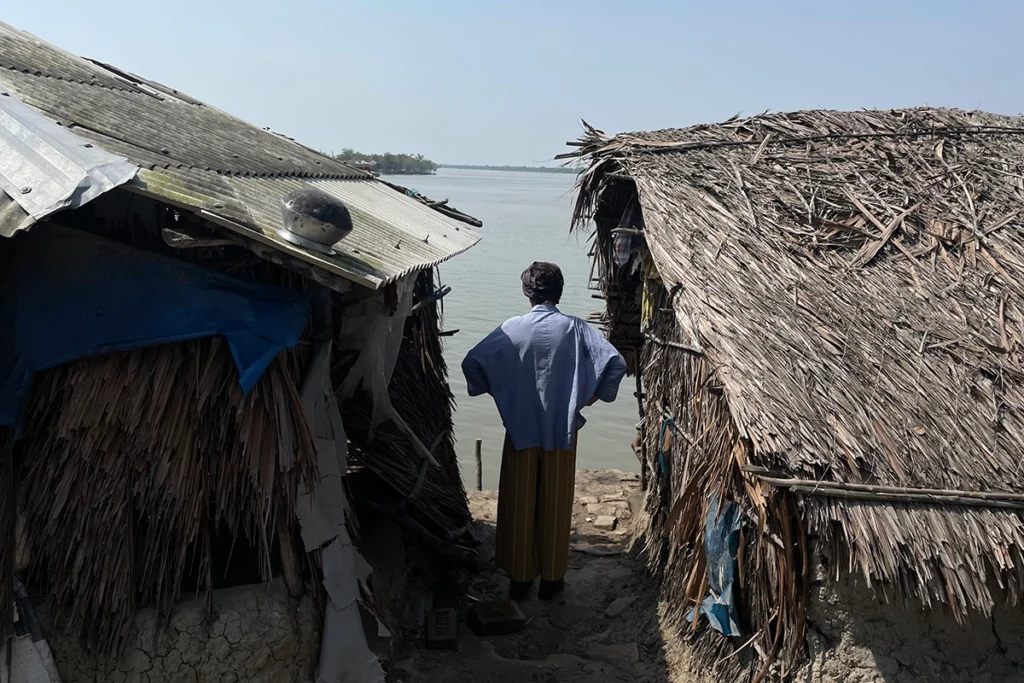
Strongly recommended. These areas have layered informal authority structures (union chairs, local leaders, NGO coordinators) that you must navigate. Trust mediates access. IOM Bangladesh provides situation reports on mobility, displacement, and climate impacts that often affect production planning in these regions.
Chittagong and port areas
Required for anything near ports, industrial zones, or strategic infrastructure. Security runs high, and authorities expect prior notification.
Northern border districts (Sylhet, Rangpur)
Recommended for work near borders or in tea estates. Less restrictive than the south, but local coordination still prevents delays.
Sundarbans and protected areas
Required. Forest department permissions, boat access, and guide coordination involve complex processes you cannot navigate yourself.
Bottom line: The more remote or sensitive your location, the more critical a fixer becomes. Even “easy” locations benefit from local navigation, but restricted zones make a fixer non-negotiable.
How to find and vet a reliable fixer in Bangladesh
Look for demonstrated access networks, crisis experience, and clear communication — not just language skills.
What to look for in a Bangladesh fixer
Essential qualifications:
Proven track record with international media (ask for references from previous clients)
- Proven track record with international media (ask for references from previous clients)
- Active institutional relationships — can they demonstrate connections with relevant ministries, NGOs, or district offices?
- Experience in your story type — climate, refugee, political, infrastructure, or general documentary
- Crisis response capability — have they worked under time pressure or sensitive circumstances?
- Clear communication style — they should explain obstacles honestly, not just say “yes” to everything
- English proficiency – appropriate to your editorial needs (fluent for interviews vs. basic for logistics-only)
Questions to ask before hiring
Access & network:
- Have you worked in [specific region/topic] before? Can you share examples?
- What relationships do you have with [relevant authority: RRRC, district commissioner, specific ministry]?
- What’s your Plan B if we can’t access our primary location?
Logistics & safety:
- How do you typically handle unexpected stops or confrontations?
- What’s your safety protocol for crews in [specific zone]?
- Do you have backup transport and communication systems?
Process & transparency:
- What information do you need from us to start coordination?
- How do you charge — daily rate, project-based, or mixed?
- What happens if we need to extend or change plans mid-shoot?
- Can you provide a cost estimate breakdown before we commit?
Red flags to avoid
Warning signs of an inexperienced or unreliable fixer:
- Guarantees access to highly restricted zones without explaining the process
- No references or evasive when asked for previous client contacts
- Cannot articulate specific relationships or coordination methods
- Quotes suspiciously low rates compared to the market average (suggests they’ll cut corners)
- Poor communication response times during your initial inquiry
- Unwilling to discuss risks or obstacles honestly
- No clear safety protocols or emergency procedures
- Suggests bypassing official permits or using “shortcuts” that could compromise your story
Green flags of a professional fixer:
- Asks detailed questions about your story goals and risk tolerance
- Provides realistic timelines and admits when something is difficult
- Offers alternative approaches when your first choice isn’t feasible
- Has working relationships with multiple gatekeepers (not dependent on one contact)
- Provides references without hesitation
- Communicates proactively about changing conditions
- Has insurance and formal business registration
For practical steps and a checklist-style approach, read: 7 Essential Tips to Find the Perfect Film Fixer in Bangladesh.
Where to find vetted fixers
Recommended sourcing methods:
- Referrals from previous productions — the most reliable method
- Journalist networks and foreign correspondent associations
- Established production service companies with permanent Bangladesh operations (like Nree Productions)
- International news bureau recommendations — Reuters, AFP, and wire services often have trusted local contacts
- Documentary filmmaker communities and film festival networks
- Vulture Groups on different social media platforms
Less reliable methods:
- General freelancer platforms (harder to verify credentials)
- Social media cold contacts without vetting
- Recommendations from people without recent Bangladesh production experience
You can also follow a structured hiring process here: How to Hire the Best Film Fixer in Bangladesh for Your Production.
Real-world frictions a fixer absorbs so the crew never sees them
Fixers kill ten problems before you see them — the value is in the frictions you never had to fight on camera day.
Real example: What happens without a fixer
When they resumed, interviewees who had agreed to participate withdrew, uncomfortable speaking to foreigners without a trusted local present. The crew salvaged some footage but left with half their planned story.
A European documentary crew arrived in Cox’s Bazar with valid press credentials and NGO introduction letters to film climate displacement. On day two, they were stopped by local police at a coastal village — not because filming was illegal, but because no one had notified the district office. The crew lost two days waiting for clearance that someone should have arranged in advance.”
The cost: $8,000+ in extended accommodation, transport, and lost access — far more than a professional fixer would have charged to prevent it.
Lesson: The crew had official permission but not operational access. That gap is what fixers exist to close.
Fully generic, non-attributable examples typical of Bangladesh assignments:
- A local political rally silently reroutes traffic, and without a fixer, the crew would be stuck for 4–6 hours
- A coastal union chair blocks outsider filming unless a known local calls ahead
- Authorities ask to inspect the story’s intent; the fixer reframes it to a neutral informational purpose
- A nervous Family refuses to interview until someone trusted vouches for cultural intent
- Police pause filming until an unseen clearance gap is bridged with a phone call
- A district officer demands written notification that the crew assumed was unnecessary
None of these appear in permit PDFs. They are field behaviours, not rules documents.
FAQs
Do foreign filmmakers legally need a fixer in Bangladesh?
Not by law in every case, but in practice for anything involving public authorities, refugee zones, ports, or sensitive subjects, crews cannot execute without a local point-person who pre-briefs and accompanies them. Foreign journalists typically need a J-Visa from the Bangladesh Ministry of Foreign Affairs.
Is a fixer the same as a translator?
No. Translation is only a small fraction. A fixer handles access, permits, diplomacy, logistics, risk avoidance, and schedule stability — all of which enable filming to actually happen.
Can I film Rohingya areas without a fixer?
In reality, you will be stopped. That corridor is highly regulated, and all external media movements are tracked. A fixer prepares clearances and escorts so filming does not get blocked.
What happens if I shoot without a fixer and get stopped?
Authorities may pause filming, inspect intent, restrict gear, or ask you to return with a local responsible liaison. In some cases, you lose the access window permanently.
Do journalists and documentary crews use the same fixers?
Often yes — the skillset overlaps (access + trust + clearance + diplomacy). Some fixers specialise in crisis, climate, legal, or refugee coverage.
Can NGOs or ministries replace a fixer?
They control permission, not execution. They rarely negotiate with police, villagers, unions, or field actors on your behalf during live filming.
Is Bangladesh difficult to film in compared to its neighbours?
Not hostile — just informal and layered. The cost of not knowing “how things move” is usually delays, lost access, or incomplete stories.
How much does hiring a fixer in Bangladesh cost?
Rates vary based on experience level and assignment complexity. Daily rates for professional fixers typically range from $150 to $500 USD, depending on the scope (logistics-only support vs. full field production coordination), location risk level, and the fixer’s network depth. Multi-week projects often negotiate package rates. Breaking news response or high-risk zone work commands premium rates. Request detailed quotes that separate fixer fees, permits, local transport, and coordination costs.
How early should I hire a fixer before my shoot?
Book 3-4 weeks minimum for standard productions. For anything involving permits, camps, government access, or sensitive locations, allow 6-8 weeks. Crisis/breaking news fixers can mobilize in 24-48 hours if they have active networks, but access quality will depend on ground conditions and existing relationships. Early booking ensures better access, lower costs, and more thorough preparation.
Will a fixer work with my existing local contacts?
Yes. Professional fixers collaborate with your contacts — NGO partners, institutional liaisons, or personal connections — and often strengthen those relationships by handling coordination layers your contacts cannot. Fixers don’t replace your sources; they make it logistically possible to reach and film with them safely and legally.
What’s the difference between a fixer and a production company in Bangladesh?
A fixer focuses on access, permits, cultural navigation, and field problem-solving. A full production company provides crews, equipment, post-production, and logistical infrastructure. Many production service companies (like Nree Productions) offer both — experienced fixers embedded within a company structure that can also provide cameras, sound, local crew, vehicles, and full-service support if needed.
Can a fixer help with post-production clearances and legal safe-use?
Yes. Professional fixers verify that captured material — especially footage involving minors, refugees, institutions, or government sites — meets legal and ethical use standards. They can secure additional documentation if broadcasters require proof of consent, institutional clearance, or location permissions during the edit or before air.
What should I prepare before contacting a fixer?
Have ready: (1) Story concept/angle, (2) Desired locations or access targets, (3) Shoot dates or flexible date range, (4) Crew size, (5) Equipment list (especially if bringing gear through customs), (6) Known sensitivities or risk factors, (7) Budget range. The more detail you provide upfront, the faster a fixer can assess feasibility and provide an accurate cost and timeline estimate.
How do I know if a fixer has the right connections for my specific story?**
Ask them directly: “Have you worked on [topic/location] before?” and “What relationships do you have with [specific authority or gatekeeper]?” A credible fixer will describe their network honestly, explain access pathways, and admit if something is outside their usual scope. Request references from previous clients who worked on similar stories.
Why choose Nree Productions as your fixer in Bangladesh
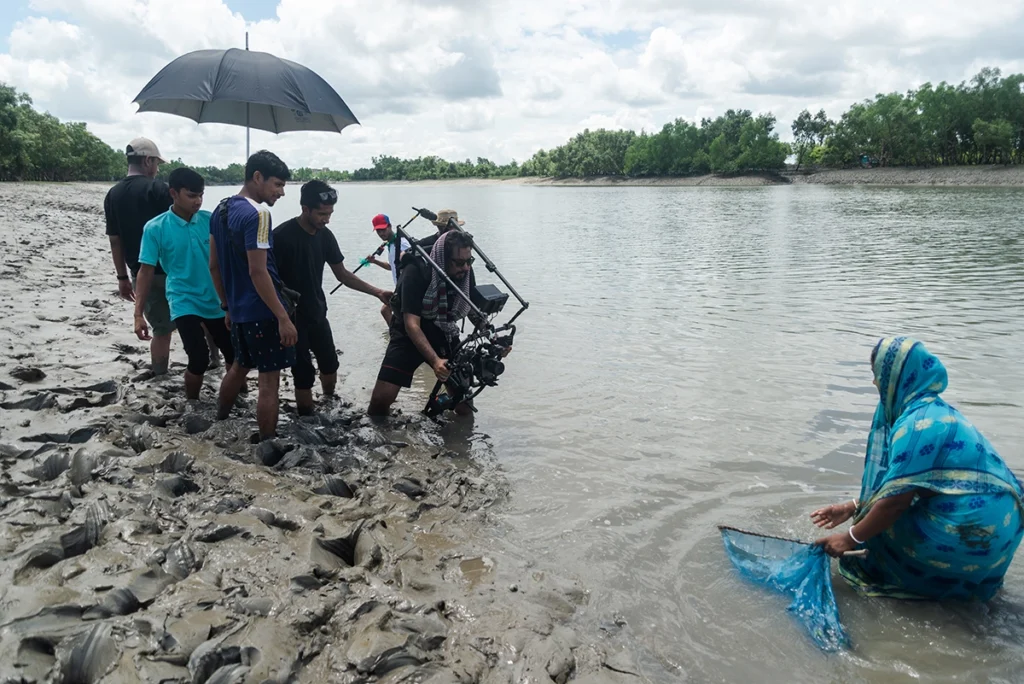
We don’t just open doors — we keep them open through pre-coordination, active problem-solving, and relationships built over years of field work across Bangladesh.
About Nree Productions
We are a Dhaka-based production services company specialising in fixer and field production support for international news organisations, documentary crews, and film units working across Bangladesh. With deep institutional relationships, district-level networks, and experience coordinating in sensitive zones, including Rohingya-adjacent areas, climate-affected regions, and restricted infrastructure sites, we help foreign teams execute complex assignments safely and on schedule.
Our team has facilitated productions for international broadcasters, human rights documentaries, climate reporting, and investigative journalism across all 64 districts of Bangladesh.
What makes our approach different
Deep institutional access
We maintain working relationships with key ministries (MoFA, MoI, NGO Affairs Bureau), district commissioners, RRRC (Refugee Relief and Repatriation Commissioner), and security coordination offices. When permits stall or field-level clearance is needed, we have direct contact channels — not just application forms.
Experience across all story types
Our team has coordinated: climate and disaster reporting, Rohingya-adjacent coverage, investigative journalism, infrastructure and development stories, human rights documentation, and branded content production. We understand the distinct access pathways each requires.
Crisis-responsive and deadline-tested
We mobilize for breaking news in under 48 hours and maintain shoot continuity during cyclones, political transitions, and security restrictions. When ground conditions shift mid-assignment, we adapt in real time while maintaining journalist safety protocols appropriate for the local context.
Full-spectrum production support
Need more than a fixer? We provide local crews, equipment, vehicles, translators, research support, and post-production coordination — all from one point of contact. Scale services up or down based on your needs.
Transparent communication and realistic planning
We tell you what’s achievable within your timeline and budget — and what isn’t. No false promises. If a location is unreachable or a story angle will trigger obstacles, we say so upfront and propose alternatives.
4/7 availability during active shoots
When you’re in the field, we’re reachable. If an unexpected stop happens or conditions change, you have immediate support — not voicemail.
Who we work with
We support:
- International broadcasters and news bureaus (TV, radio, digital)
- Documentary filmmakers and independent producers
- NGO communications and advocacy teams
- Branded content and corporate video production
- Photojournalists and multimedia reporters
- Academic researchers requiring field access
Whether you’re a veteran team returning to Bangladesh or a first-time crew, we build the access architecture that makes your story filmable
Conclusion: Why hire a fixer in Bangladesh
Because Bangladesh is a country where access is trust-mediated, process is layered, time windows are fragile, and the cost of misunderstanding reality is a broken story.
A fixer in Bangladesh is not optional “help” — it is the structural condition that makes film or news work repeatably executable. They convert formal permission into usable ground access, prevent avoidable confrontations, keep characters steady, maintain timeline integrity, and translate the logic of place to outsiders who cannot see those currents from the outside.
Without that bridge, most foreign productions discover the same thing the hard way: the problem was never the story — it was the pathway to it.
If you’re evaluating production partners, here’s a breakdown of what sets us apart: Why Choose Nree Productions as a Professional Video Production Company in Bangladesh for Your Next Project.
We support foreign newsrooms, documentary crews, and branded film units across Bangladesh with access, permits, research, logistics, and field-safe execution.
Ready to plan your Bangladesh production?
We’ll assess your story, clarify access pathways, and provide a detailed feasibility and cost estimate — usually within 24 hours. Contact Now!
