Managing a film project in Bangladesh as an international producer means navigating three distinct phases — pre-production, the shoot, and post-production — each with its own vendors, timelines, and risks. Most productions hire separately for each phase: a local fixer, a production crew, and a post-house. The result is fragmented accountability, communication breakdowns, and budget overruns that compound across every handoff.
Consolidating all three phases under one full service video production Bangladesh partner is not just convenient — for high-stakes international projects, it is the difference between a smooth production and an expensive rescue operation.
Key Takeaways (For Busy Producers)
- One point of contact across pre-production, shoot, and post — no blame game between vendors.
- Bangladesh expertise built in — permits, locations, crew, and local logistics handled from Day 1.
- Rolling post-production — editing begins while you are still shooting, cutting turnaround significantly.
- Data integrity guaranteed — checksum-verified backups on set, not after the drives are shipped.
- Cultural context preserved — the team that filmed the interviews also edits them.
Best Picks by Scenario
- Tightest deadline → Integrated partner enables same-day proxy editing while shooting continues.
- First-time Bangladesh shoot → Local fixer-editor team eliminates logistical unknowns.
- Documentary projects → Team present during interviews knows exactly which moments to cut to.
- Remote or sensitive locations → Partner with permits experience and field-to-cloud data pipelines.
- Large data volumes (100–300 GB/day) → On-set NAS backup + proxy workflow keeps nothing at risk.
- Budget-sensitive productions → Single contract eliminates redundant PMs, couriers, and ingestion fees.
- High security requirements → Centralised, encrypted data handling from camera card to final export.
What ‘Full Service’ Actually Means
Most vendors cover one phase. Full service means one partner owns all three — and the context travels with the footage.
In practice, the term is used loosely in the industry. A local fixer is not full-service. A post-house is not full-service. Full-service video production in Bangladesh means a single, integrated partner managing every phase of your project:
| Phase | What’s Included | Who Usually Provides It |
| Pre-Production | Locations, permits, crew, equipment, recce, schedule | Local fixer (partial) |
| Production | Shoot direction, data management, on-ground logistics | Separate crew + fixer |
| Post-Production | Editing, colour, sound, delivery | Separate post-house |
| Full Service (Nree Productions) | All of the above, one team, one contract | Nree Productions |
Phase 1 — Pre-Production: Where Most Bangladesh Shoots Fail Before They Start
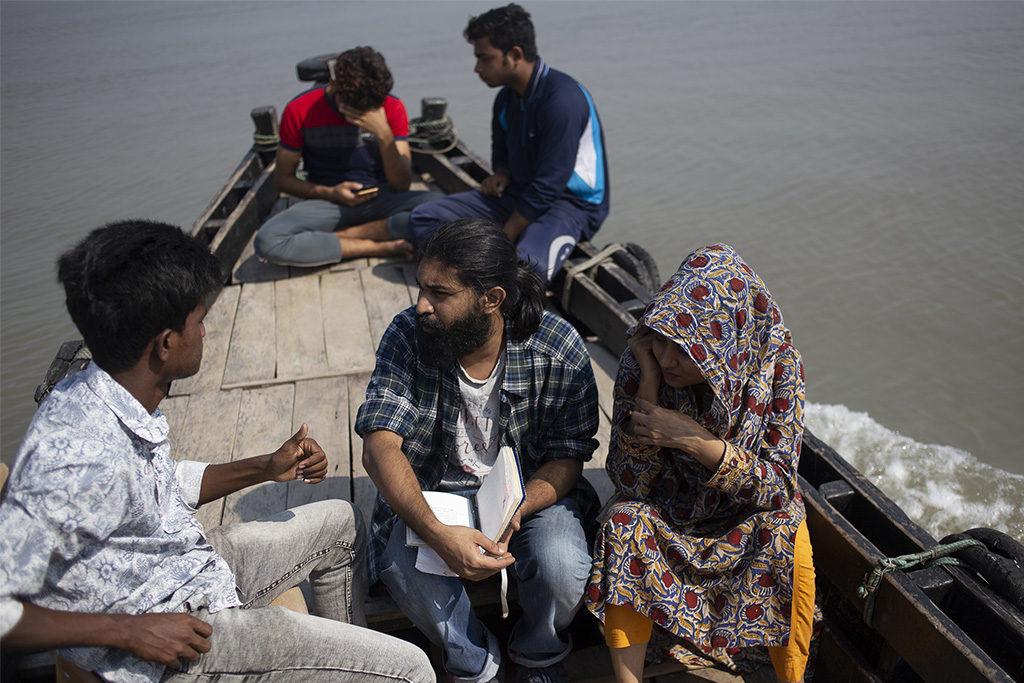
Bangladesh offers extraordinary visuals. Getting to them requires local knowledge that no amount of remote planning can replace.
International producers consistently underestimate pre-production complexity in Bangladesh. The country spans dense urban environments, river deltas, hill tracts, and coastal terrain — each requiring different logistics, permissions, and crew knowledge. Getting this phase wrong means reshoots, delays, and wasted shoot days
As your end to end video production partner, Nree handles:
- Location scouting across the best filming locations in Bangladesh — with honest assessments of access difficulty and permit requirements.
- Permits and permissions — navigating government departments, district authorities, and community access. Bangladesh’s permit landscape is complex and changes frequently. International journalists and documentary producers will also need to review our guide to journalist visas for Bangladesh before arrival.
- Local crew hiring — trusted DPs, sound recordists, grips, and PAs with broadcast production experience.
- Equipment sourcing — Sony α7 IV, Arri systems, and broadcast-standard audio gear available locally, eliminating the need for ATA Carnets on international travel. If your project requires aerial footage, see our dedicated guide to drone filming permits in Bangladesh.
- Recce planning and shot list alignment — your editor reviews the recce notes before Day 1, so post-production requirements shape what gets captured.
- Schedule and budget building — accounting for Bangladesh realities: monsoon season windows, prayer times, traffic in Dhaka, and generator dependency in rural areas.
Bangladesh’s permit landscape is complex and changes frequently. See our full guide to navigating visa and permits for documentary filming.
When your fixer and your editor work for the same company, the post-production supervisor is effectively present during pre-production. Metadata conventions, LUT selections, and sound sync markers are agreed upon before the first card rolls.
For a comprehensive overview of logistics, see our complete filming in Bangladesh guide 2026.
Phase 2 — Production: Shoot Day Realities in Bangladesh
Heat, humidity, power cuts, and crowd dynamics require experienced on-ground management — and data protection starts the moment the card is pulled.

Bangladesh is not a controlled studio environment. Productions that treat it like one pay for it in corrupted files, unusable footage, and blown schedules. Productions that treat it like one pay for it — read our full breakdown of why hiring a fixer in Bangladesh is non-negotiable.
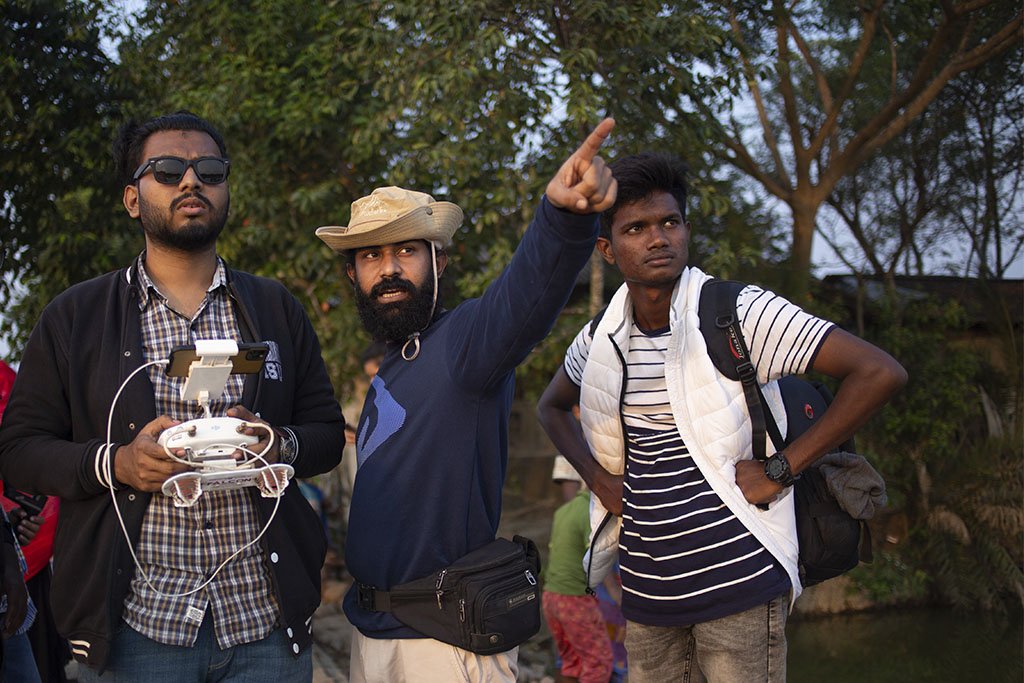
An experienced single vendor video production team manages these realities as standard:
- Climate management — average temperatures of 30–40°C and humidity above 80% in peak season affect both crew performance and equipment reliability. Nree provides shade logistics, equipment cooling, and contingency scheduling. Nree productions provides shade logistics, equipment cooling, and contingency scheduling — including safe film crew transport in Bangladesh for remote locations.
- Power redundancy — erratic grid supply in rural areas means shoot days depend on generator backup. Our production team carries redundant power solutions as default.
- Fixer as production backbone — beyond translation, Our film fixer in Bangladesh manages community relations, handles unexpected access restrictions, and keeps the shooting schedule moving.
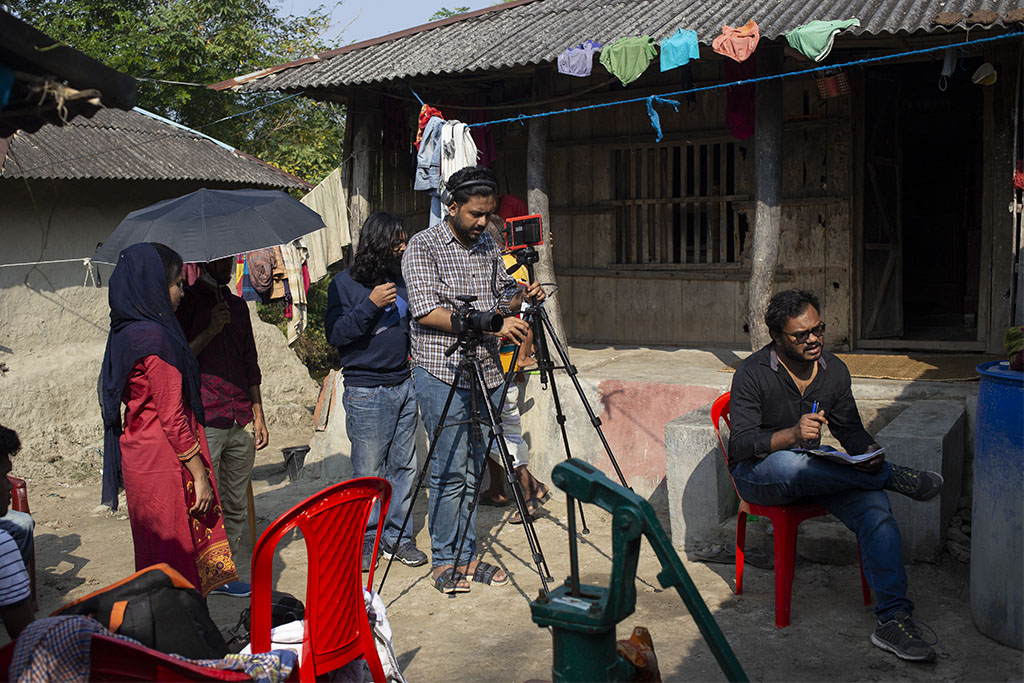
- On-set data management — cards are offloaded, checksummed, and backed up to local NAS on the same day they are shot. Nothing waits for a courier. [Internal link: /transfer-large-video-files-for-editing/]
A Typical Shoot Day with Nree (How-To)
- Pre-dawn prep: Equipment checked, cards formatted, NAS powered and tested before crew call.
- Shoot: Director and fixer work in tandem — logistics handled so the creative team focuses on story.
- Card pull (each session): Footage copied immediately to NAS with checksum verification using Silverstack or Hedge.
- End of day backup: Full copy to secondary drive. Critical projects: cloud backup via MASV or encrypted SFTP.
- Same-day proxy creation: Low-resolution proxies generated and sent to the editing suite overnight.
- Editor briefed: Fixer notes on key moments, interview highlights, and location context shared with the edit team that evening.
Phase 3 — Post-Production: Where Field Context Becomes Story
The editor who knows what happened on set makes better creative decisions than one working from a hard drive alone.
This is where the integrated model pays off most visibly. When fixing and editing video services are delivered by the same company, the cultural nuance captured during a Rohingya camp interview does not get lost in translation between teams. — because there is no translation. The context travels with the footage.
Nree’s post-production workflow is built around the streamlined video production workflow principle:
- Rolling assembly — while the crew is shooting Day 3, the editor is assembling Day 1. A rough cut is typically ready within 48 hours of the final shoot day. For international producers working remotely, our outsource video editing workflow guide covers the technical setup in detail.
- Proxy-based remote editing — lightweight files allow editing to begin immediately; final conform uses the original 4K or 8K masters. No quality loss, no waiting.
- Client review via Frame.io — frame-accurate timecode comments, easy mobile access, and version tracking. No email chains with vague timestamps.
- Colour grading and sound design — DaVinci Resolve Studio for high-end finishing, with LUTs agreed during pre-production so the grade is consistent with the field intent.
- Final delivery — broadcast, streaming, and social formats exported to your specification.
The Hidden Costs of Splitting These Three Phases Across Vendors
Every handoff between vendors is a cost centre — and most of them are invisible until something goes wrong.
When you hire separately for each phase, you pay for coordination you never see on an invoice:
| Hidden Cost | Fragmented Vendors | Single Vendor (Nree) |
| Project management | Two to three separate PMs are duplicating communication | One PM across all phases |
| Data ingestion | Editor charges to organise someone else’s folder structure | Included — organised from Day 1 |
| Physical media shipping | DHL courier costs for drives between fixer and post-house | Eliminated — cloud transfer on set |
| Reshoot risk | Misaligned briefs discovered in post, crew already dispersed | Edit team flags gaps during the shoot |
| Blame gaps | Fixer blames post for rejecting footage; post blames fixer for metadata | One accountable team |
Post Production
According to Pomfort — developer of industry-standard DIT software Silverstack — most data loss events in professional production occur during the field-to-post handoff, not during the shoot itself. See their guide to on-set data management principles for the full breakdown. An integrated partner eliminates that handoff.
Tool Cards: Technology Across All Three Phases
Tool Card: Silverstack / Hedge (On-Set Data Management)
| Label | Detail |
| Best for | Checksum-verified offload and backup on set |
| Pros | Simultaneous copy to multiple destinations; built-in verification |
| Cons | Requires dedicated data wrangler laptop on set |
| Typical speed factors | Drive read/write speed; number of simultaneous destinations |
| Security notes | Cryptographic checksum confirms zero data corruption |
| Pricing model | Subscription-based; varies by plan — check silverstack.net |
| Ideal file types | RAW, BRAW, ProRes, MXF |
| Setup difficulty | Medium — requires setup before shoot day |
Tool Card: DaVinci Resolve Studio (Finishing)
| Label | Detail |
| Best for | High-end colour grading, audio finishing, and final export |
| Pros | Native 8K RAW; collaborative multi-user workflow; integrated Fairlight audio |
| Cons | Requires high-performance GPU hardware; learning curve for complex projects |
| Typical speed factors | GPU acceleration; project drive speed; proxy vs. full-res editing |
| Security notes | Supports encrypted project libraries |
| Pricing model | One-time licence for Studio version; varies by region |
| Ideal file types | RAW, BRAW, ProRes, H.265, MXF |
| Setup difficulty | Medium to high — hardware investment required |
Tool Card: Frame.io (Client Review)
| Label | Detail |
| Best for | Frame-accurate client approvals and feedback across time zones |
| Pros | Timecode comments; version history; easy mobile access; no client account needed |
| Cons | High-res previews dependent on client’s upload bandwidth |
| Typical speed factors | Local upload speed at the client’s end |
| Security notes | SOC 2 Type II compliant |
| Pricing model | Subscription-based; varies by storage and seat count — check frame.io |
| Ideal file types | H.264 / H.265 review proxies |
| Setup difficulty | Easy — browser and app accessible |
Decision Framework: When to Choose a Full Service Partner
- First time shooting in Bangladesh → Local expertise across all three phases is non-negotiable.
- Tight deadline → Rolling post-production only works when fixing and editing are the same team.
- Documentary or sensitive subject matter → The editor needs field context that only the fixer has.
- Large daily data volumes → On-set data management must be built into the production contract.
- Remote or restricted locations → Permits, access, and logistics require dedicated local expertise.
- High security requirements → Centralised, ISO-compliant data handling from set to delivery.
Glossary: Key Terms Simplified
- Checksum: A digital fingerprint confirming a file was copied 100% accurately without corruption.
- SFTP: Secure File Transfer Protocol — encrypted method for moving large video files over the internet.
- Proxy Workflow: Editing using lightweight low-resolution copies, later relinked to 4K/8K masters for final export.
- NLE: Non-Linear Editor — software such as Adobe Premiere Pro or DaVinci Resolve.
- NAS: Network Attached Storage — an on-set central server for immediate multi-destination backup.
- LUT: Look-Up Table — a colour preset applied to footage ensuring visual consistency from field to grade.
- Recce: Pre-shoot location reconnaissance to assess logistics, light, access, and permit requirements.
- ATA Carnet: A customs document required for temporarily importing professional equipment internationally.
Frequently Asked Questions
It means one company manages all three phases: pre-production (locations, permits, crew, equipment), production (shoot days, data management, on-ground logistics), and post-production (editing, colour grading, sound design, final delivery). One contract, one point of contact, full accountability.
For a straightforward corporate or commercial project, two to three weeks is standard. Documentaries in sensitive or remote locations — Rohingya camps, UNESCO World Heritage-listed Sundarbans, Chittagong Hill Tracts — typically require four to six weeks for permits and access arrangements. We advise on realistic timelines during the initial quote.
We provide broadcast-standard equipment, including Sony α7 IV, Arri systems, and professional audio rigs. This eliminates the need for ATA Carnets on international travel and removes the risk of equipment damage or confiscation at Bangladeshi customs.
With our integrated workflow, proxy files are sent to the editing suite the same evening the footage is shot. Editing begins that night. A first assembly is typically ready within 48 hours of the final shoot day.
Every card is offloaded on set using checksum verification software (Silverstack or Hedge), backed up to a local NAS, and for critical projects, uploaded to encrypted cloud storage the same day. Nothing waits for a courier. Data integrity is confirmed before any card is reformatted.
Broadcast documentaries, international news features, commercial branded content, NGO and development sector films, and any project where cultural nuance, data security, and turnaround speed are non-negotiable. If a miscommunication between your fixer and your post-house would be expensive — this model removes that risk entirely. For documentary productions specifically, see our guide to working with a documentary film fixer in Bangladesh.
Conclusion: One Partner, Three Phases, Zero Handoff Risk
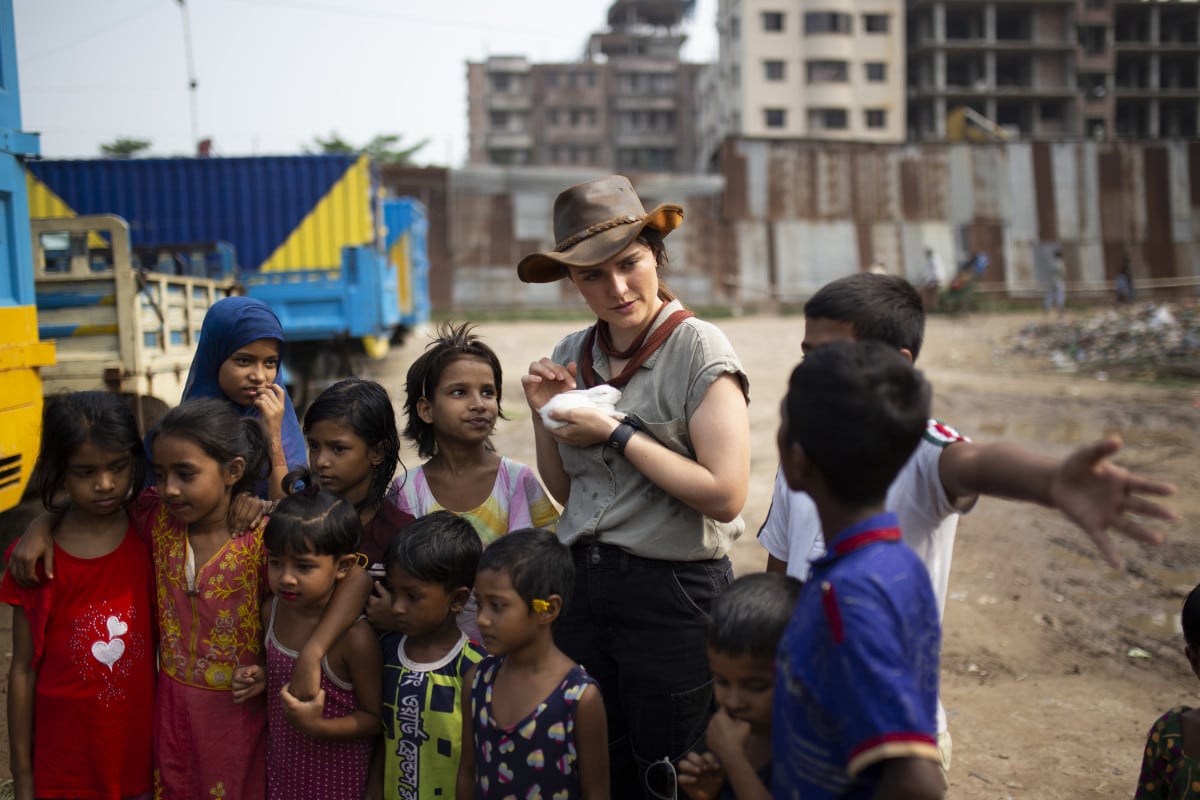
A full service video production Bangladesh partner does not just save you the administrative burden of managing three separate vendors. It protects your creative vision at every stage — from the first permit application in Dhaka to the final colour grade in the studio. The team that scouts your locations understands your story. The team that shoots your footage knows how the editor thinks. The team that edits your film was briefed from Day 1.
Ready to plan your Bangladesh production? Contact Nree Productions for a comprehensive quote covering pre-production, shoot, and post-production.
