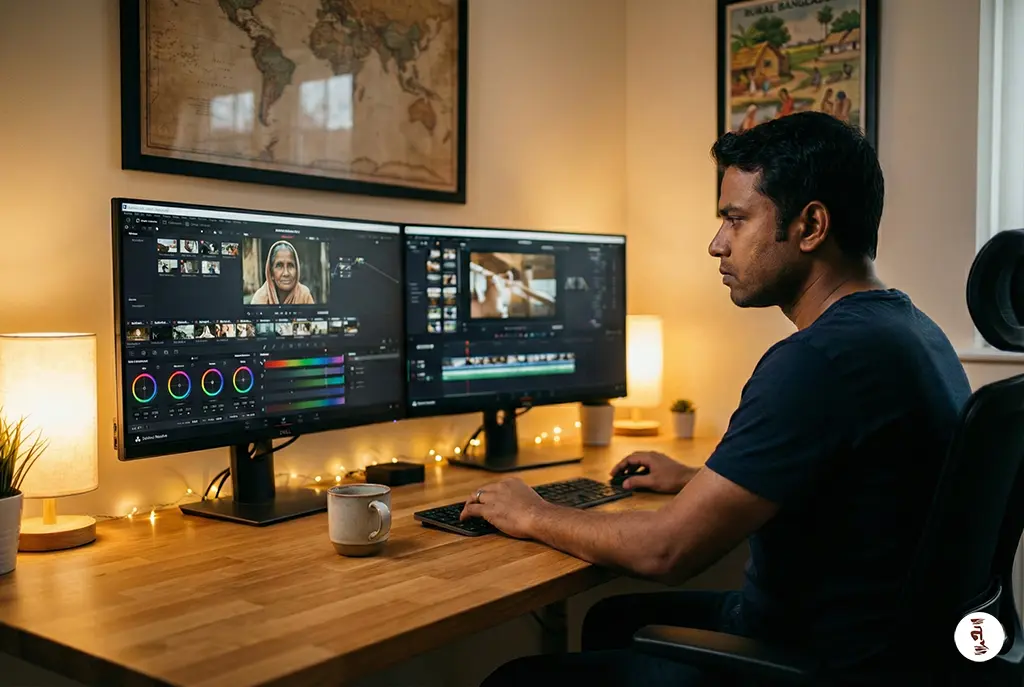
Outsourcing video editing expands your creative capacity when you have the right workflow. Top directors and production houses use structured systems to protect their brand voice while scaling quality – and so can you.
This guide walks through the exact system international directors use to outsource video editing successfully, from vetting editors to final approval.
You’ll learn:
- The SAFE framework that replaces micromanagement with clear systems
- How to give time-stamped feedback that cuts revision rounds from 7 to 3
- A paid test project method to vet editors before long-term commitment
- Time zone strategies that turn overnight delays into next-morning deliverables
Why Control Is the Biggest Barrier to Outsourcing
For directors and producers, the real risk isn’t losing control – it’s lacking a system. Specifically:
- Will the editor understand our brand’s subtle visual language?
- How do we prevent endless revision cycles?
- What happens when “technically correct” footage feels emotionally wrong?
According to collaboration workflow research, 60% of creative teams endure five or more revision rounds, with 14% going through 10 or more. The problem isn’t remote work—it’s the absence of structured systems.
Step 1: Build Your Outsource Video Editing Workflow Foundation
Use this framework before every outsourced project:
Define Decision Authority First
Before sharing a single file, document:
- Who approves final cuts (one person only)
- Who can request changes (limit to 2-3 stakeholders)
- Who interprets brand guidelines when questions arise
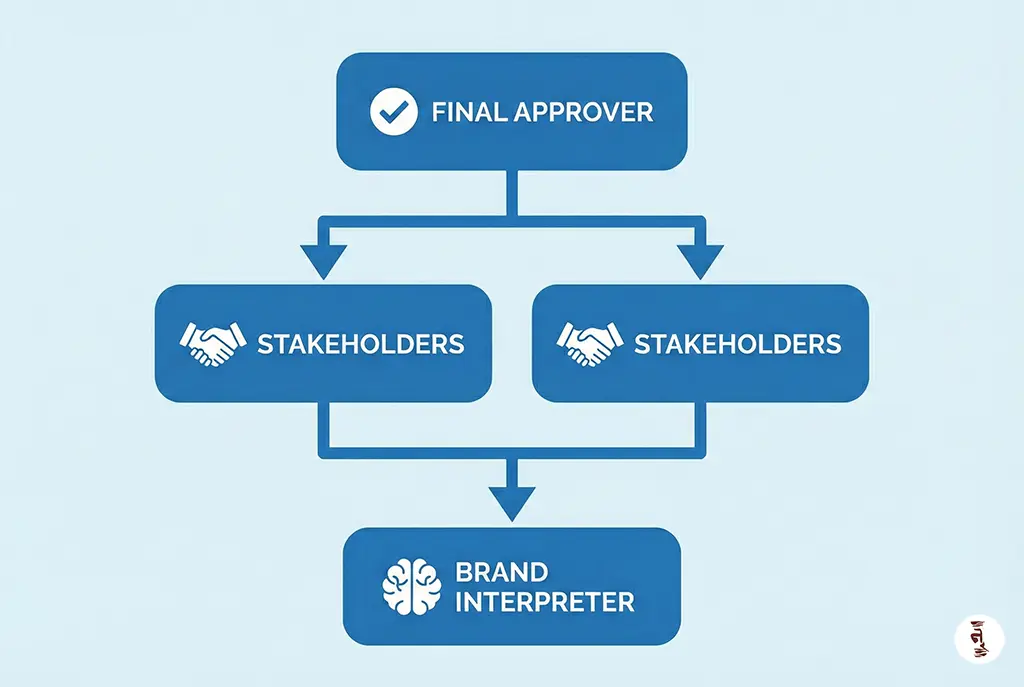
Why this works: It prevents “creative drift” where multiple voices dilute your original intent. Make this a one-page PDF your editor receives with the brief.
Create a Comprehensive Brand Style Guide
Your editor needs more than your logo. Provide:
- Visual references: 3–5 videos showing your desired aesthetic with specific notes on what works (e.g., “0:22–0:35 – the pacing here gives breathing room”)
- Forbidden elements: Fast cuts? Overused transitions? List your non-negotiables.
- Technical specs: Export settings, naming conventions, delivery formats.
- Tone descriptors: Is your brand cinematic and restrained or energetic and bold?
Pro tip: Host your style guide in a shared cloud folder so editors can reference it anytime.
Step 2: Write a Creative Brief That Eliminates Guesswork
A director-proof creative brief answers every question before the editor asks it.
Essential Brief Components
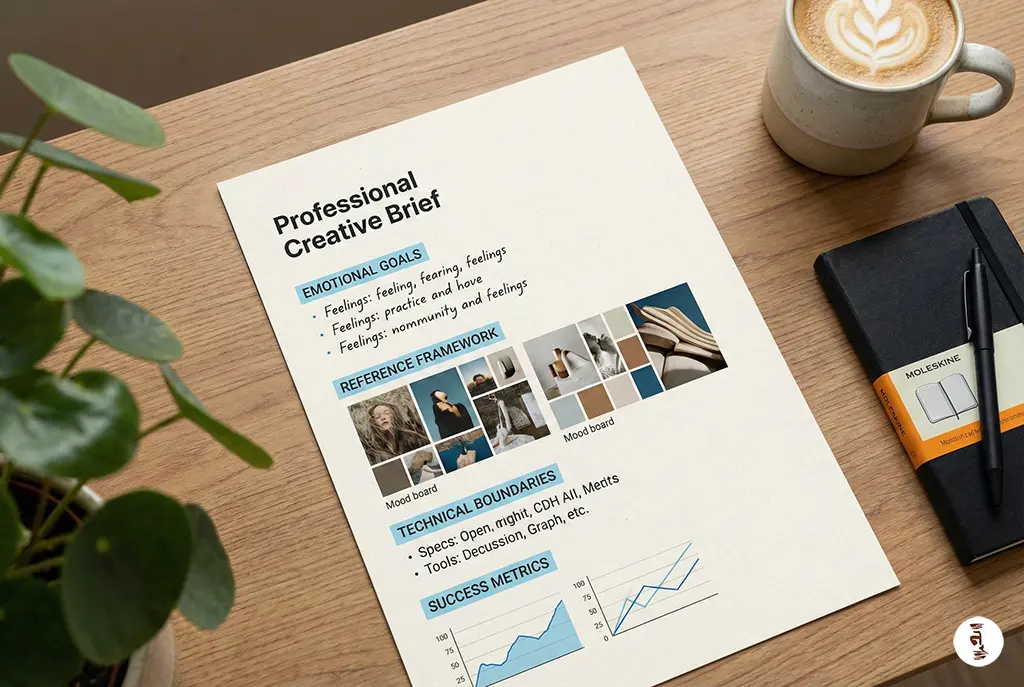
Emotional Goal: Don’t say “make it engaging.” Say: “Viewers should feel contemplative and curious by the 45-second mark, transitioning to inspired by the end.”
Reference Framework: Instead of sharing 10 examples, provide 2-3 specific cuts with timestamps: “The pacing in this section (0:15-0:32) matches our brand—notice the breathing room between shots.”
Technical Boundaries:
- Maximum cut frequency (e.g., no more than one cut every 3 seconds)
- Color grading range (warm/cool, saturated/muted)
- Music style (avoid generic corporate, lean toward…)
Success Metrics: Define what “done” looks like beyond technical delivery. Does the edit need to drive specific emotions? Maintain pacing rhythms from your reference?
Establish a Video Review and Approval Process
A structured approval process is what separates professional workflows from chaotic ones.
The Three-Round Maximum Rule
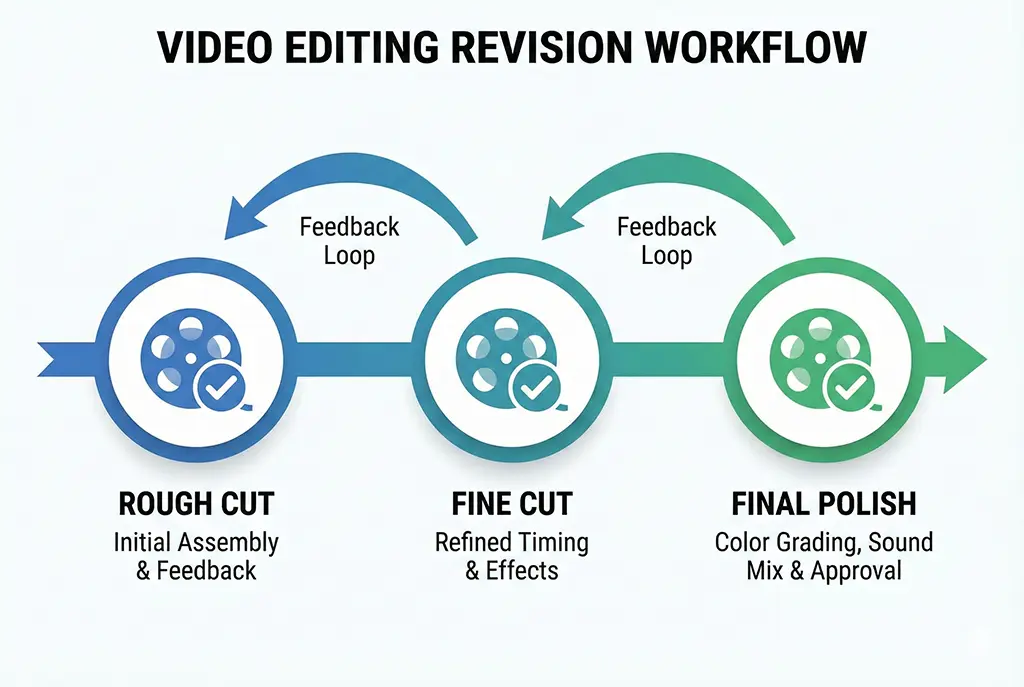
Limit feedback to three structured rounds: rough cut, fine cut, final polish. Here’s why it works:
Round 1 – Narrative Structure: Review story flow, pacing, and major creative decisions only. Ignore small technical issues.
Round 2 – Technical Refinement: Address color, audio levels, transitions, graphics. Structure holds, polish improves.
Round 3 – Final QC: Catch only what was missed. No new creative direction.
How to Give Feedback That Works
Use time-stamped, categorized notes:
Mandatory: “0:23 – Replace this B-roll with provided alternate angle. Music overpowers dialogue here.”
Optional: “1:15 – Consider tightening this section by 3-5 seconds if possible without disrupting flow.”
Question: “2:04 – This transition feels abrupt. Was this intentional for dramatic effect?”
Avoid: “Make it more dynamic” or “This doesn’t feel right.” These create confusion, not clarity.
Tools That Streamline Approval
Use dedicated review platforms like Frame.io, Wipster, or Filestage that support time-coded comments and version tracking. Email threads and Slack messages scatter feedback and slow production.
Step 4: Managing Remote Video Editors Across Time Zones
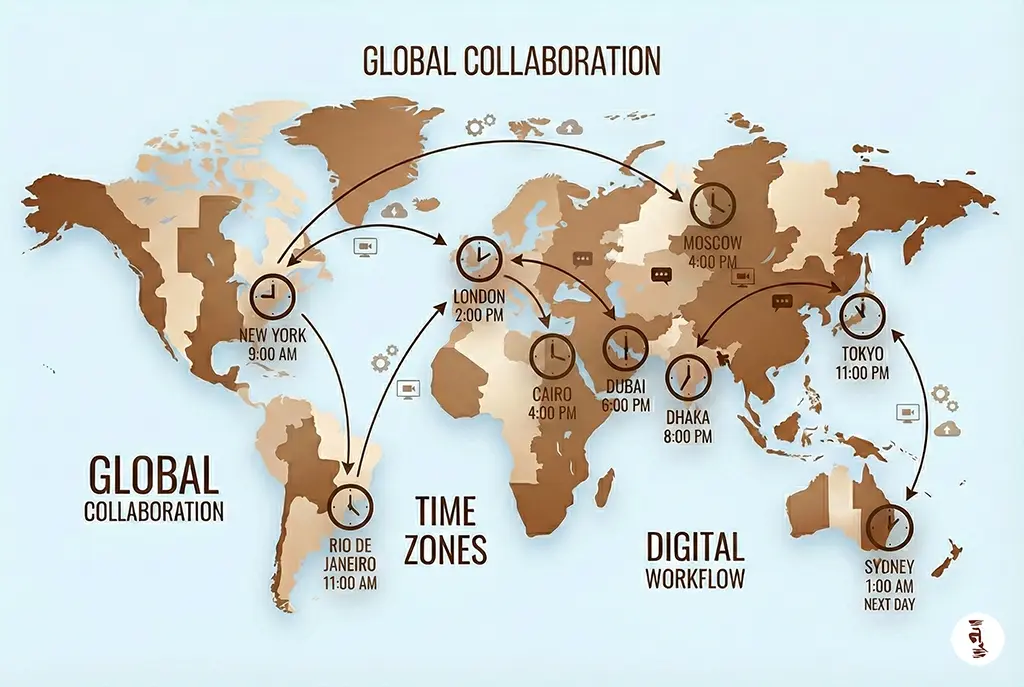
Time zones become advantages with the right approach.
Leverage Asynchronous Communication
Evening handoff model: You review cuts at 6 PM your time, editor receives notes and works overnight, updated version ready by 8 AM.
Overlap hours: Schedule 2-3 hours of overlapping availability for complex questions only.
UTC standardization: Set all deadlines in UTC to eliminate confusion.
Collaborative Video Editing Best Practices
Lock shared resources:
- Style templates: Provide pre-made lower thirds, title cards, and transition presets
- Approved music library: Pre-vetted tracks eliminate back-and-forth
- Color LUTs: Supply your preferred color grading profiles
- Version naming: Enforce strict conventions (ProjectName_v1.2_Date, never “final_FINAL”)
Require editors to document major creative choices in brief notes. This reveals whether they understand your brand logic or are guessing.
Step 5: Vetting and Selecting the Right Editor
Not all editors match every project. Test before committing.
The Paid Test Project Method
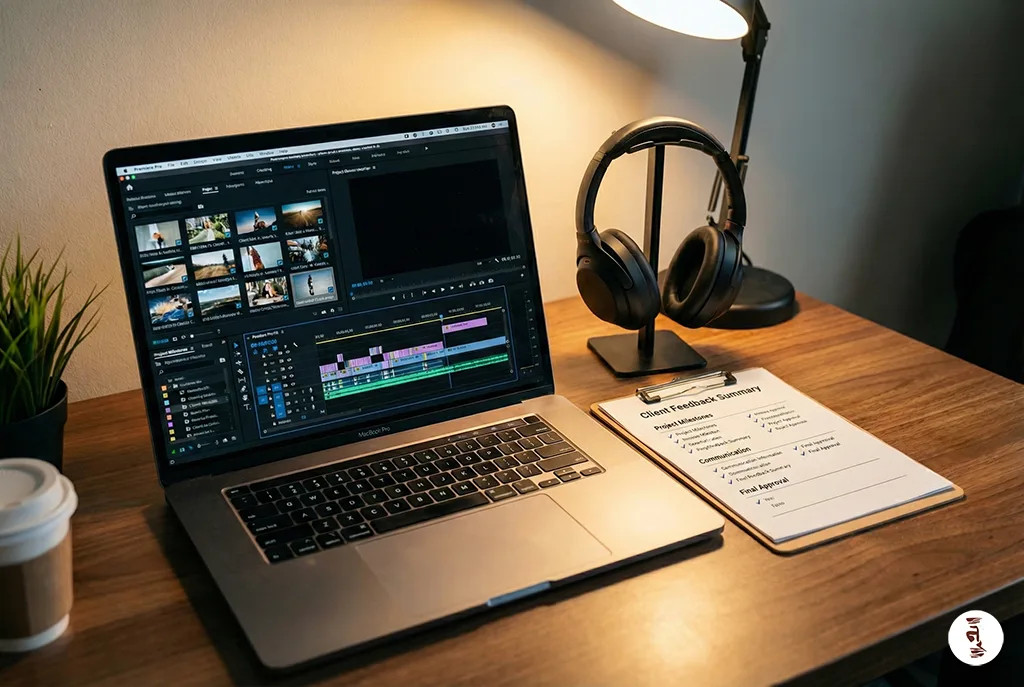
Before long-term engagement:
- Assign a small, paid project (2-3 minute edit)
- Provide your full brief and style guide
- Evaluate: technical skill, brand interpretation, revision responsiveness
- Request one round of revisions to assess their process
This investment prevents mismatches that waste weeks.
Red Flags to Watch
- Can’t provide portfolio samples matching your genre
- Avoids discussing their revision policy upfront
- Communicates inconsistently during test project
- Delivers work without accompanying notes explaining creative choices
Step 6: Setting Up Secure File Management
Use cloud storage with end-to-end encryption and granular access controls to protect your footage while enabling collaboration.
Workflow Architecture
- Main storage: Google Drive, Dropbox, or dedicated platforms like LucidLink for large files
- Review platform: Frame.io or equivalent for feedback
- Communication: Single channel (Slack, email—pick one)
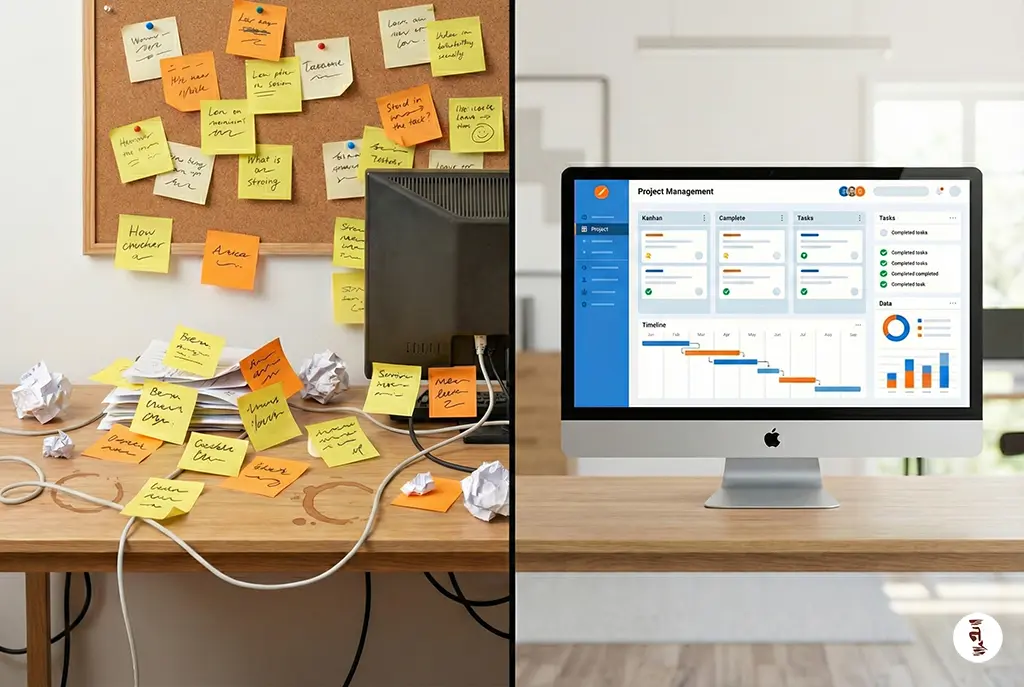
- Project management: Asana or Trello for milestone tracking
Avoid spreading your workflow across six different tools. Consolidation reduces errors and lost files.
The SAFE Framework: Your Outsourcing Checklist
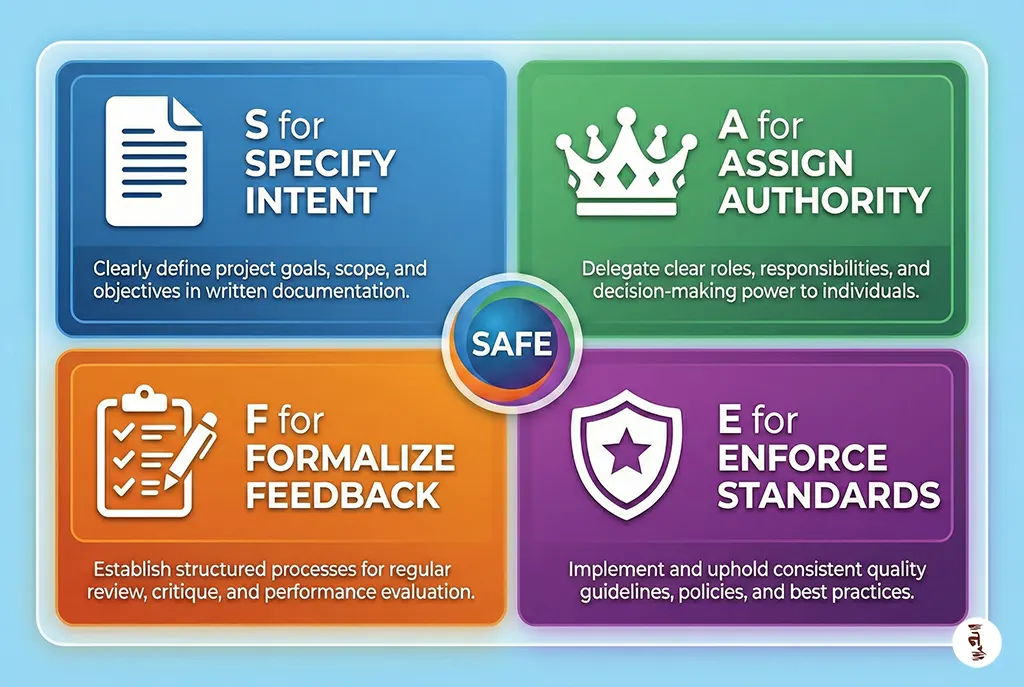
Use this SAFE framework before every outsourced project.
S – Specify Intent: Document emotional goals, brand boundaries, and reference materials
A – Assign Authority: Designate final decision-maker and limit stakeholder voices
F – Formalize Feedback: Use structured, time-coded notes within defined revision rounds
E – Enforce Standards: Provide locked style guides, templates, and technical specifications
This system addresses the core fear: losing control while outsourcing.
When Outsourcing May Not Be Right
Sometimes keeping work in-house makes more sense:
- Extremely sensitive or confidential content
- Projects requiring hourly creative pivots
- First-time brand establishment work where you’re still defining visual identity
- Ultra-tight deadlines (under 48 hours) with no relationship established
Understanding limitations prevents frustration.
For international documentary productions, outsourcing becomes especially valuable when navigating complex filming logistics. If you’re planning documentary work in Bangladesh, understanding local regulations is crucial—learn more in our guide on navigating VISA, permits, and regulations for documentary filming in Bangladesh.
Real-World Results: What Changes With Better Systems
Professional production teams that implement structured workflows report:
- Revision rounds drop from 5-7 to 2-3 on average
- Turnaround time improves by 30-40%
- Creative satisfaction increases because expectations are managed, not hoped for
The key insight: experienced directors don’t micromanage—they systematize.
This systematic approach is particularly valuable in challenging production environments. For example, documentary filmmakers working in sensitive locations like refugee camps need reliable remote editing partners to handle footage securely and efficiently. Our field guide on filming in the Rohingya Camp demonstrates how professional workflows support complex documentary projects.
Getting Started: Your First 48 Hours
Day 1:
- Create your brand style guide (or update existing one)
- Write your decision authority document (one page)
- Set up your file management structure (cloud + review platform)
Day 2:
- Research 3–5 potential editors
- Request portfolio samples matching your genre
- Prepare your paid test project brief
Control isn’t defended through constant oversight—it’s designed through clear systems. Need help implementing this system? Contact our team for a consultation
Final Words
Outsourcing video editing doesn’t mean losing control—it means designing systems that protect your vision. Use the SAFE framework, limit revisions to three rounds, and vet editors with a paid test project. Control isn’t defended through constant oversight; it’s built through clear workflows. Start small, systematize, and scale with confidence.
Frequently Asked Questions
Provide comprehensive reference videos with specific annotations on what works and why. Require editors to explain their major creative decisions in notes accompanying each delivery.
For a 2-3 minute video: 3-5 days for rough cut, 2 days between revision rounds. Rush work compromises quality—factor in proper review time.
Freelancers offer flexibility and cost-efficiency for occasional work. Dedicated editors (like Nree Productions) deliver consistency and brand familiarity for ongoing content. Agencies suit large-scale campaigns needing multiple specialists. Learn more about why choosing a professional video production company in Bangladesh can streamline your entire post-production workflow.
Two to three structured rounds maintain quality and efficiency. More rounds usually indicate unclear briefs, not editor capability.
This signals a brief gap, not necessarily editor failure. Review your reference materials and style guide. Were they specific enough? Request a conversation to align understanding before the next attempt.
Yes, if you lock narrative structure, tone boundaries, and approval authority upfront. Documentary editing requires deeper collaboration, so consider more overlap hours during story development. Check out our comprehensive guide on how to become a documentary filmmaker for more insights.
Ready to implement a professional outsource video editing workflow? Start with your style guide today. When systems protect your vision, remote collaboration becomes a competitive advantage, not a creative risk.
At Nree Productions, we specialize in remote video editing services built on these exact frameworks—delivering consistent, brand-aligned content for international productions without compromising your creative control.
