
Estimated reading time: 12 minutes
Filming in Bangladesh requires navigating government permits, customs clearance procedures, and visa requirements that can stop foreign crews before they even land. But the country offers visual access few places can match—from the Sundarbans mangrove forest to Old Dhaka’s dense urban fabric—making the bureaucratic effort worthwhile for prepared producers.
Whether you’re asking “Do I need a filming permit in Bangladesh?” or “How do I bring professional equipment through customs?”, this guide answers every logistical question with field-tested workflows, realistic timelines, and the same coordination approach we use with international crews working in Bangladesh.
his guide is designed as a practical reference for foreign journalists, documentary filmmakers, NGOs, and international production teams planning shoots in Bangladesh. It outlines the regulatory steps, coordination process, and realistic preparation timelines required to film legally and efficiently.
This guide draws from Nree Productions’ field experience supporting international crews for National Geographic, Discovery, Sky News, Channel 4, Reuters, and The Economist. As a Dhaka-based production support agency run by journalists and filmmakers
Table of contents
- Quick Answers by Production Type
- What are the government rules for filming permits in Bangladesh?
- What is the difference between J-Visa and A-Category Visa for Bangladesh?
- Customs Clearance for Film Equipment in Bangladesh
- What are the best shooting locations in Bangladesh for documentaries?
- 2026 Drone Regulations (CAAB) for Filming in Bangladesh
- How Do You Film Legally in Bangladesh? Step-by-Step Process
- FAQ: Filming in Bangladesh
- Conclusion
Quick Answers by Production Type
Based on what we’ve coordinated for international crews:
- News Coverage: J-Visa + press accreditation. Timeline: 3 weeks minimum
- Documentaries: J-Visa + FF-1 filming permit + location clearances. Timeline: 4-6 weeks
- Commercials: J-Visa + ministry approval + location permits. Timeline: 6-8 weeks
- Equipment (Cinema Cameras): Bank guarantee arranged by local fixer prevents customs delays
- Drone Filming: CAAB permit requires 45+ days; most crews hire licensed local operators
- Sensitive Locations (Refugee camps, shipyards): Additional ministry clearances + possible government escorts
What are the government rules for filming permits in Bangladesh?
The Ministry of Information coordinates all foreign filming in Bangladesh. Unlike film commissions with streamlined processes, you’re navigating government bureaucracy that requires early planning and local coordination through experienced fixers. The good news? The rules are consistent and published. Every foreign crew follows the same FF-1 and FF-2 process, works through a local sponsor for J-Visa approval, and films strictly within approved locations. With accurate paperwork and local support, your permit clears smoothly — and you gain full legal access to film across Bangladesh.
How does the FF-1 and FF-2 permit system work in Bangladesh?
FF-1 (Crew & Project Details) captures your crew list, passport numbers, shooting itinerary, project description, and local sponsor information. FF-2 (Equipment Declaration) lists every piece of gear with serial numbers, declared value, and re-export commitment. Submit both together — and once approved, you film only where your FF-1 specifies.
FF-1 Form (Crew & Project Details)
- Complete crew list with passport numbers
- Exact shooting itinerary with dates
- Project description and intended use
- Local sponsor information (required)
FF-2 Form (Equipment Declaration)
- Every piece of gear with serial numbers
- Declared value for customs
- Temporary import justification
- Re-export commitment
Critical detail from our experience: If your FF-1 says you’re filming in Sylhet but you get stopped filming in Old Dhaka, your permit can be revoked. Accuracy matters. If your itinerary changes, coordinate updates through your local fixer before filming.
How long do filming permits and visas take to approve in Bangladesh?
From our coordination work with international crews:
- Form submission to ministry: 2-4 weeks before arrival
- Ministry review: 15-25 working days
- Embassy visa processing: 5-7 days after ministry approval
- Location-specific permits: Often processed parallel to FF-1, but can add 1-2 weeks
For refugee camp access (Rohingya camps in Cox’s Bazar), add another layer: RRRC (Refugee Relief and Repatriation Commissioner) clearance, which we’ve seen take 2-4 additional weeks.
What is the difference between J-Visa and A-Category Visa for Bangladesh?
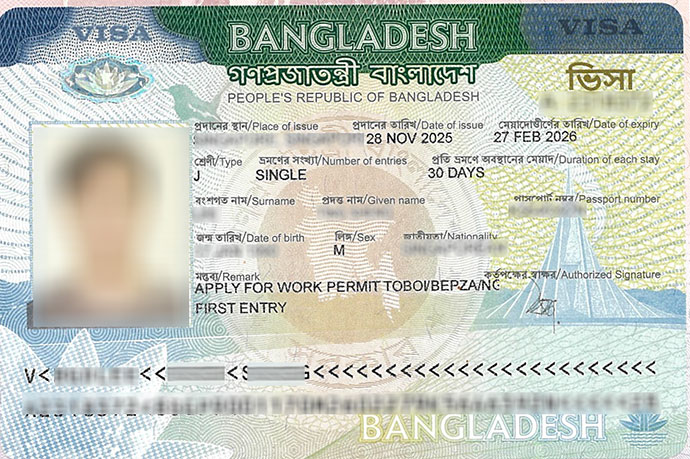
In Bangladesh, the main difference between a J-Visa and an A-Category visa is their purpose: J (Journalist) visas are for media professionals visiting for news gathering, while A-Category visas are generally for diplomats and foreign government officials. J-visas require specialized clearance, while A-visas typically require a note verbale. This is the most common mistake we see from first-time crews in Bangladesh. Once you recognize the core differences between J-Visa and A-Category Visa, the journalist visa process in Bangladesh becomes straightforward — and legal filming in Bangladesh falls into place without complications.
J-Visa (Journalist Visa)
Who needs it:
90% of foreign media crews
- News coverage
- Documentary filmmaking
- Some commercial shoots with editorial content
- Photojournalism assignments
What it requires:
- Invitation letter from local sponsor (we provide this for crews we support)
- Assignment letter from your organization
- Press credentials or portfolio
- FF-1 approval from Ministry of Information
A-Category Visa
Who actually needs it:
- Reserved for government consultants
- High-level official assignments
- Direct government project work
Why does it cause problems:
Complicates customs clearance and creates bureaucratic confusion. We’ve never recommended this for media crews.
The Local Sponsor Requirement
You cannot apply for an FF-1 or J-Visa without a Bangladesh-based sponsor. This is where working with an experienced fixer becomes essential—we handle the invitation letter, ministry liaison, and form submission that foreign crews can’t do independently.
Customs Clearance for Film Equipment in Bangladesh
This is the logistical concern we hear most from international crews. In our experience supporting productions with equipment from DSLRs to full cinema camera packages, problems arise only when paperwork is incomplete or expectations aren’t managed.
The Bank Guarantee Reality
Bangladesh technically recognizes ATA Carnets, but customs officials often require a bank guarantee for professional film equipment—particularly for packages with 5+ cases.
How it works:
- Your local fixer deposits a refundable bank guarantee (typically 100% of declared equipment value) with the Bangladesh Bank
- Customs releases equipment against this guarantee
- Upon re-export, equipment is verified and guarantee is refunded
Why this matters:
Without a local partner who can arrange this guarantee before you land, your equipment can sit in customs for days while you scramble to find a bank willing to work with a foreign entity.
Our Equipment Clearance Approach
For crews we support, we pre-coordinate with customs before arrival:
- Submit FF-2 forms with exact serial numbers (photographed from equipment if needed)
- Arrange bank guarantee 5-7 days before arrival (prevents airport delays)
- Airport coordination on arrival day to expedite clearance
- Re-export verification on departure to release guarantee
Real example: A Channel 4 crew brought RED cameras and full lighting package (18 cases total). Because we submitted serial numbers two weeks before arrival and arranged the bank guarantee in advance, customs clearance took 45 minutes at the airport instead of 2-3 days.
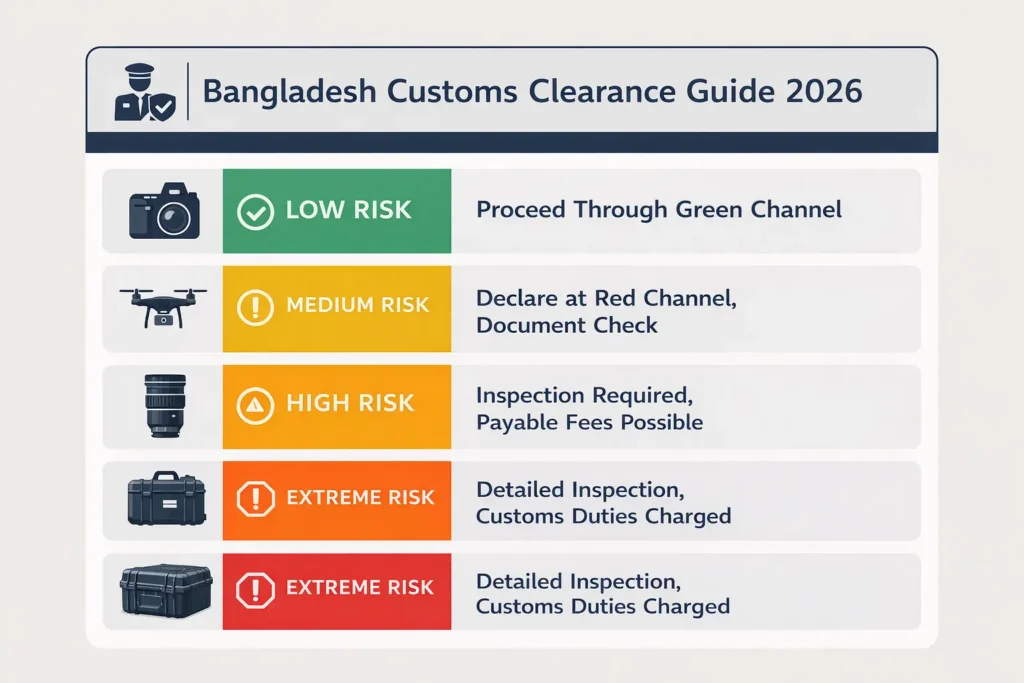
Equipment Risk Assessment
From our field experience:
| Equipment Type | Clearance Difficulty | Our Recommendation |
| Cinema Cameras (RED, ARRI) | High | Pre-arrange bank guarantee |
| Drones | Extreme | Hire licensed local operator |
| Lenses & Camera Bodies | Medium | Hand-carry when possible |
| Lights & Grip | Medium-High | Consider local rental in Dhaka |
| Hard Drives & Cards | Low | Carry-on only (ensure encryption) |
Local Equipment Rental Alternative
Dhaka’s rental market has improved significantly. We now coordinate ARRI SkyPanel lighting, RED camera bodies, and professional grip equipment for crews who want to avoid customs entirely. This works well for shorter shoots (1-2 weeks) where rental costs are less than customs coordination time.
What are the best shooting locations in Bangladesh for documentaries?
We’ve coordinated production across every major filming environment in Bangladesh. Here’s what each location actually requires beyond the basic filming permit. For a comprehensive guide to all available locations, see our complete guide to filming locations in Bangladesh.
Old Dhaka: Urban Density
Visual character: Narrow alleys, rickshaw traffic, colonial-era architecture (Ahsan Manzil), river terminals at Sadarghat
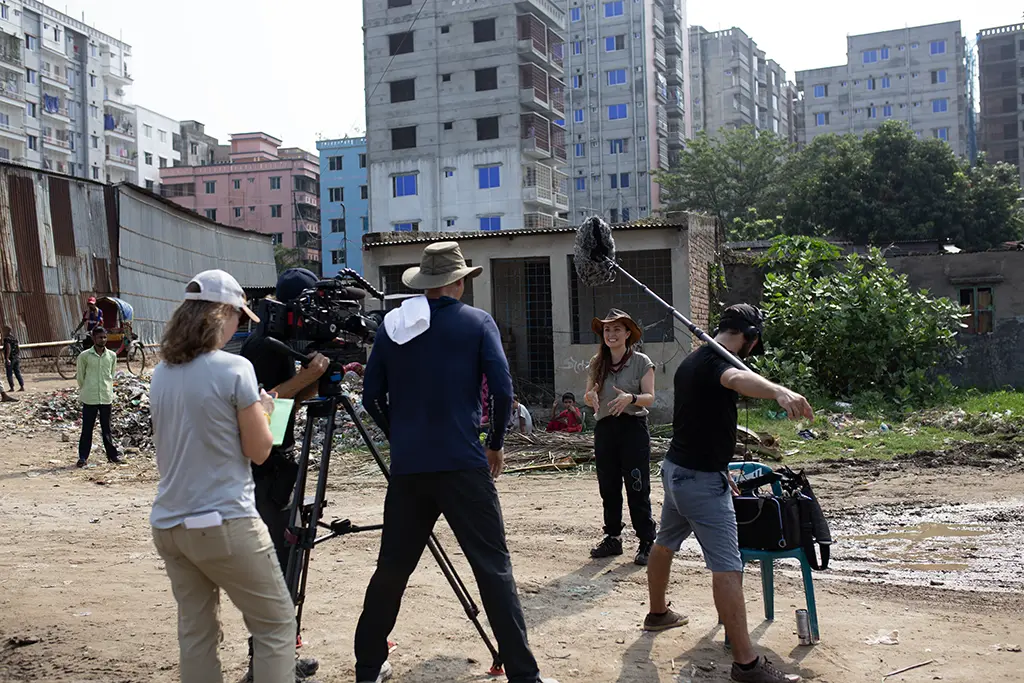
Logistics reality: You will draw crowds—often 200-500 people within 5 minutes of setting up a camera. For controlled filming, we coordinate:
- “Blocker” team to manage crowd flow
- Early morning call times (5:00-7:00 AM, before street traffic peaks)
- Local police notification (not always required, but prevents interruptions)
Permit status: Easy to get permission compared to others.
Best for: Documentaries about urban life, commercial b-roll, news coverage
Chittagong Ship Breaking Yards
Visual character: Post-industrial, massive tankers being dismantled on beaches by hand
Permit status: Highly restricted. Requires Ministry of Industries approval (separate from Ministry of Information).
Our experience: We’ve coordinated access twice for international crews. Timeline was 6-8 weeks, required extensive justification about editorial intent, and one request was denied due to “negative portrayal concerns.” This is not a location where you show up and hope for access.
The Sundarbans
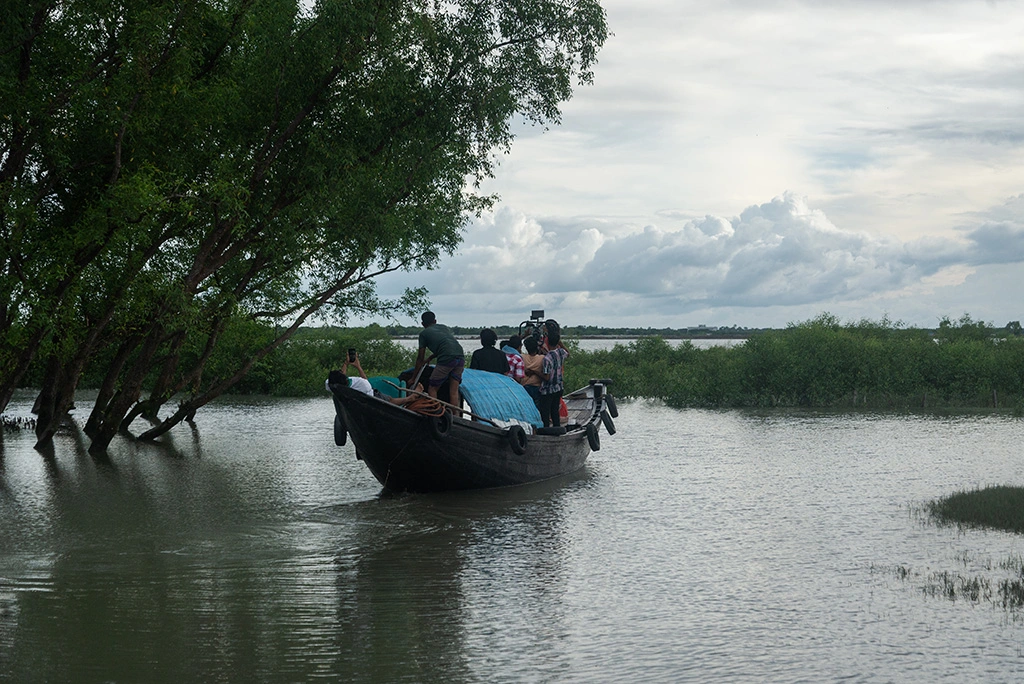
Visual character: World’s largest mangrove forest, Bengal tigers, silent river deltas
Logistics:
- No hotels inside the forest—you live on a boat for the duration
- Armed forest ranger escort mandatory (tiger safety)
- Limited mobile network (plan for offline communication)
- Best filming season: November-March (lower humidity, clearer light)
- Read about filming the Sundarbans and climate stories
Our approach: We’ve produced multiple Sundarbans shoots for natural history crews. The key is coordinating the right boat (equipped for 3-5 day shoots), experienced boat captain who knows tiger territory, and ensuring your DP understands you’re filming from a moving platform.
Cox’s Bazar & Rohingya Refugee Camps
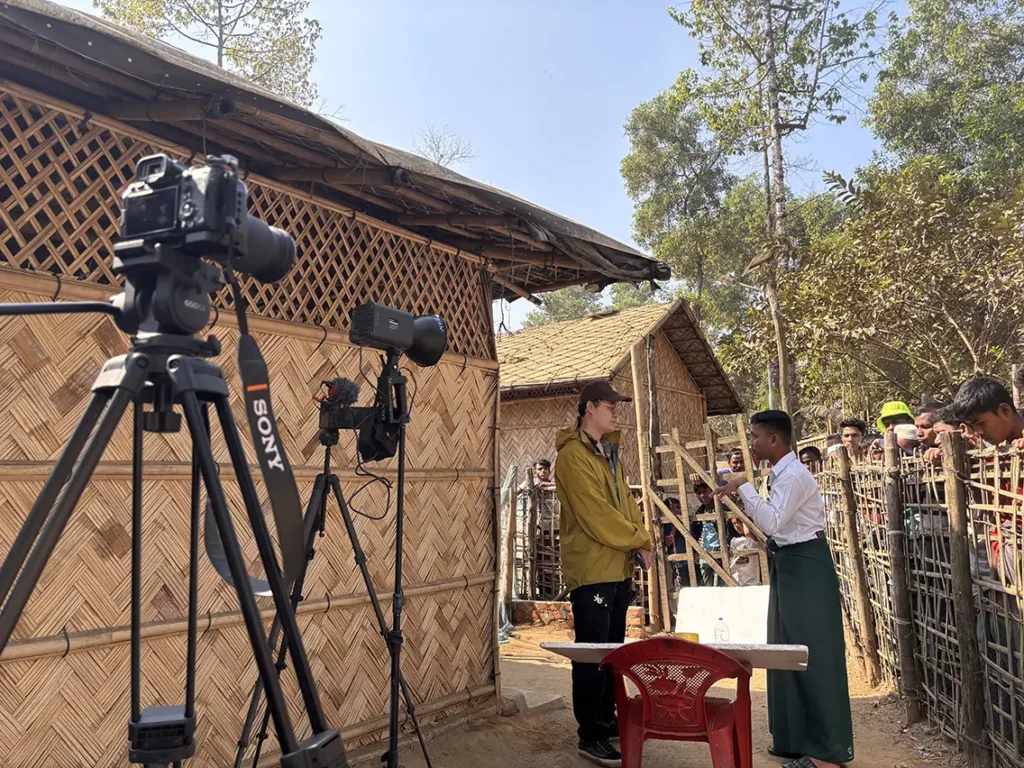
Cox’s Bazar: Longest natural sea beach. Colorful fishing boats, coastal communities.
Refugee camps: Separate RRRC clearance required. Access has tightened significantly since 2024 due to security concerns.
What we’ve seen work: For refugee camp access, crews need clear editorial justification, often a pre-existing relationship with NGOs operating in the camps (UNHCR, IOM), and willingness to work with government-assigned “minders” who accompany filming.
2026 Drone Regulations (CAAB) for Filming in Bangladesh
Drone filming in Bangladesh is strictly controlled. As of early 2026, operations near airports remain restricted, and all drone use requires Civil Aviation Authority of Bangladesh (CAAB) clearance.
The approval process:
- Submit flight plan to CAAB with exact GPS coordinates
- Security clearance from intelligence agencies (yes, really)
- Approval timeline: 30-45 days minimum
- Restrictions: No flights near government buildings, airports, military installations
What most crews do: Hire licensed local drone operators who already have standing CAAB permissions. We coordinate this for international crews—the operator brings legally approved drones, knows restricted zones, and handles the paperwork you’d spend 6 weeks navigating.
Cost comparison:
- Importing your own drone + CAAB approval: $500-800 in fees + 6 weeks + risk of denial
- Local licensed operator (day rate): $200-400, immediate availability
How Do You Film Legally in Bangladesh? Step-by-Step Process
Time needed: 60 days
Total timeline: 6-8 weeks for full preparation
This is the exact process we follow when coordinating international crews:
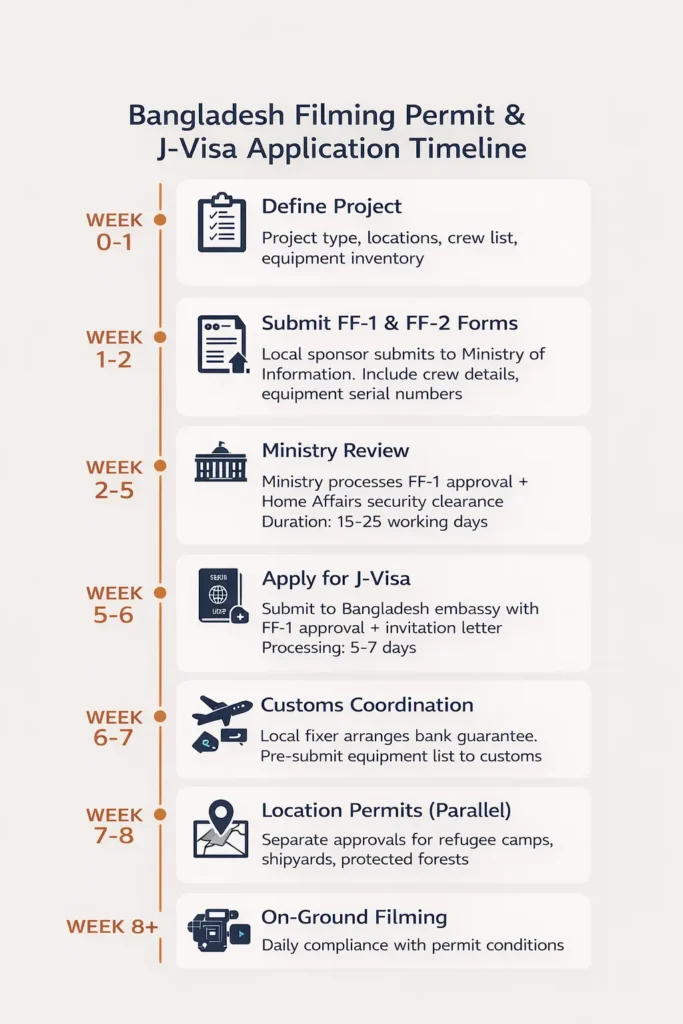
- Step 1: Define Your Project (Week 0)
Project type: news, documentary, commercial
Shooting locations
Crew size and equipment list
Filming dates - Step 2: Choose Correct Visa Category (Week 0)
J-Visa for 90% of media crews
Confirm you have local sponsor for invitation letter - Step 3: Submit FF-1 & FF-2 Forms (Week 1-2)
Local sponsor submits to Ministry of Information
Include complete crew details and exact itinerary
Equipment list with serial numbers - Step 4: Ministry Review (Week 2-5)
Ministry processes FF-1 approval
Home Affairs security clearance (if filming sensitive locations)
Typical duration: 15-25 working days - Step 5: Apply for J-Visa (Week 5-6)
Submit to Bangladesh embassy in your country
Requires FF-1 approval + invitation letter from local sponsor
Embassy processing: 5-7 days - Step 6: Customs Coordination (Week 6-7)
Local fixer arranges bank guarantee for equipment
Pre-submit FF-2 and equipment serial numbers to customs
Coordinate airport clearance - Step 7: Location Permits (Parallel Process)
Some locations require separate permissions (refugee camps, shipyards, protected forests)
Local fixer coordinates these parallel to FF-1 - Step 8: On-Ground Filming (Week 8+)
Daily compliance with permit conditions
Coordination with local authorities as needed
FAQ: Filming in Bangladesh
Yes. All foreign media production requires Ministry of Information approval through the FF-1 system. News coverage under J-Visa follows the same process.
Yes, with proper FF-2 customs documentation. For professional cinema cameras (RED, ARRI) or packages with 5+ cases, expect to arrange a bank guarantee through your local fixer.
Legally, no—but practically, yes. You need a Bangladesh-based sponsor to submit FF-1 forms and arrange J-Visa invitation letters. Most international crews work with fixers for customs coordination, location access, and translation.
Ministry review: 15-25 working days. Embassy visa processing: 5-7 days. Total preparation timeline: 6-8 weeks for complex shoots, 3-4 weeks minimum for news coverage.
No. Filming professionally on a tourist visa is illegal. If caught, your equipment can be confiscated and you may be deported. Always get the J-Visa.
Yes. Violent crime against foreign crews is rare. Main risks are traffic accidents (Dhaka traffic is chaotic), petty theft in crowds, and tropical illness (dengue fever during monsoon season). We provide security assessment for all locations.
Rohingya refugee camps in Cox’s Bazar require separate RRRC (Refugee Relief and Repatriation Commissioner) clearance beyond the FF-1 permit. Timeline: add 2-4 weeks. Access has tightened since 2024; expect possible government escorts during filming.
Yes. Bangladesh has experienced camera operators, gaffers, sound recordists, and production assistants familiar with international standards. We coordinate vetted crew based on your production needs.
Conclusion
Filming in Bangladesh rewards prepared producers with visual access and human stories few countries can offer. But the bureaucracy is real—a missing serial number on an FF-2 form can delay your shoot by days, and attempting to navigate ministry approvals without local coordination wastes weeks of your pre-production timeline.
The difference between a smooth production and a logistical disaster often comes down to early planning, accurate paperwork, and working with fixers who understand both government bureaucracy and editorial production needs.
Ready to plan your shoot in Bangladesh? Nree Productions coordinates end-to-end production support for international crews—from FF-1 permits and customs clearance to location access and field coordination. We handle the bureaucracy so you can focus on the story.
